eForms Logo

Montana Residential Purchase Agreement

4.9 Stars | 66 Ratings
Downloads: 935

Updated June 23, 2025

A Montana residential purchase agreement is a binding contract used by the buyer of a property to make an offer to the seller. It outlines the amount offered, the buyer's financing methods, and the expiration date. The written agreement becomes legally binding when both parties sign it.

State Laws

Buyer Beware – Montana is a “buyer beware” state, which means that the buyer assumes total responsibility for a property once they have purchased it.

Agent’s Duties – An agent representing the buyer or seller is legally required to disclose all relevant and material information that is known to them, including adverse material facts about the property.[1]

Seller’s Disclosures (4)
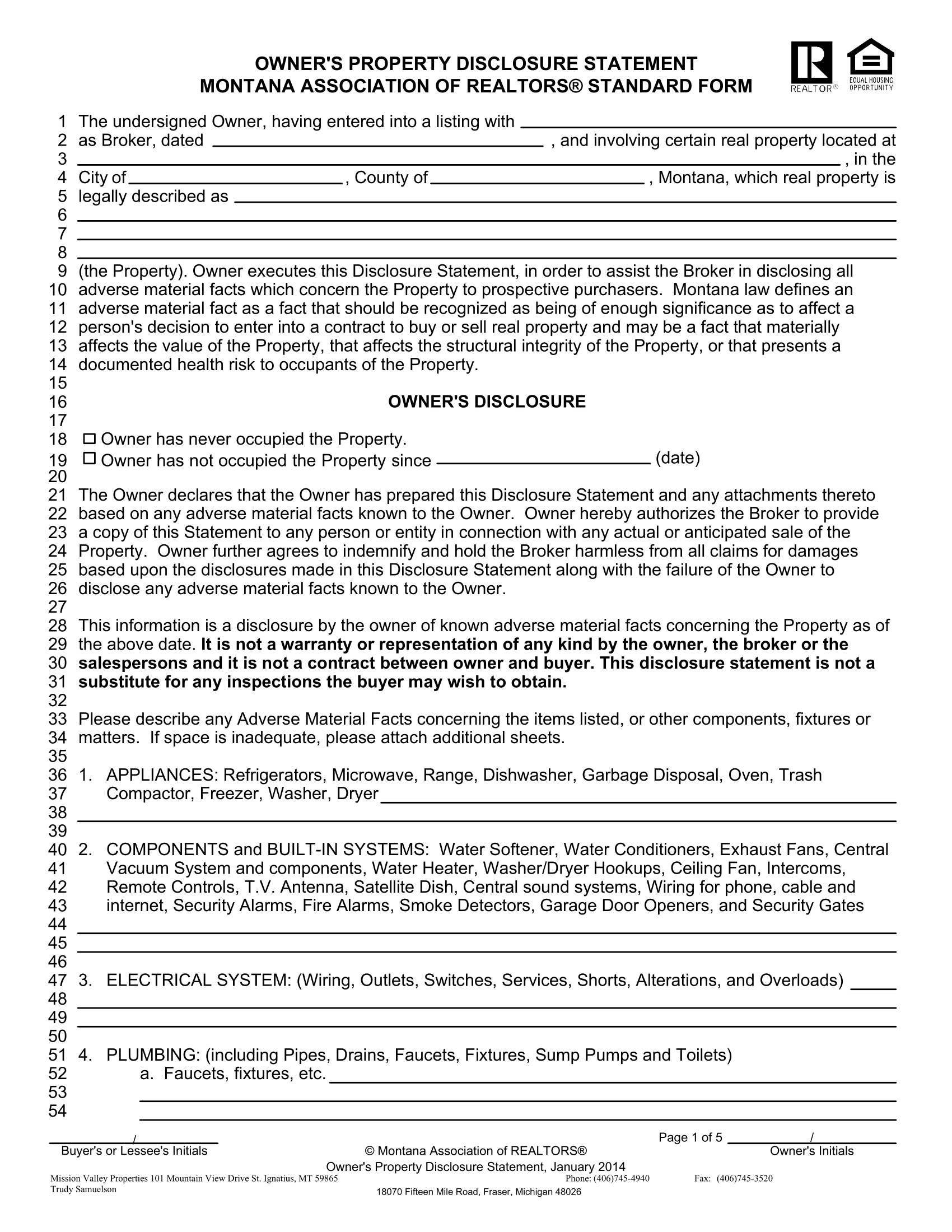
Agency Disclosure Form (required) – Requires the listing agent to “adverse material facts” on the property. This can be done by using the Seller’s Property Disclosure Statement.[2]
Statement of Mold Disclosure (required) – The following must be included in a purchase agreement:[3]

MOLD DISCLOSURE: There are many types of mold. Inhabitable properties are not, and cannot be, constructed to exclude mold. Moisture is one of the most significant factors contributing to mold growth. Information about controlling mold growth may be available from your county extension agent or health department. Certain strains of mold may cause damage to property and may adversely affect the health of susceptible persons, including allergic reactions that may include skin, eye, nose, and throat irritation. Certain strains of mold may cause infections, particularly in individuals with suppressed immune systems. Some experts contend that certain strains of mold may cause serious and even life-threatening diseases. However, experts do not agree about the nature and extent of the health problems caused by mold or about the level of mold exposure that may cause health problems. The Centers for Disease Control and Prevention is studying the link between mold and serious health conditions. The seller, landlord, seller’s agent, buyer’s agent, or property manager cannot and does not represent or warrant the absence of mold. It is the buyer’s or tenant’s obligation to determine whether a mold problem is present. To do so, the buyer or tenant should hire a qualified inspector and make any contract to purchase, rent, or lease contingent upon the results of that inspection. A seller, landlord, seller’s agent, buyer’s agent, or property manager who provides this mold disclosure statement, provides for the disclosure of any prior testing and any subsequent mitigation or treatment for mold, and discloses any knowledge of mold is not liable in any action based on the presence of or propensity for mold in a building that is subject to any contract to purchase, rent, or lease.”

Lead-Based Paint Disclosure (conditional) – All states require that owners of property constructed before 1978 must provide buyers with a statement describing the presence of lead-based paint (or lack thereof).[4]

Download: PDF

Lead-Based Paint Pamphlet (conditional) – Gives general information about lead-based paint for properties built before 1978.[5]

Download: PDF

Sample

Download: PDF, MS Word, ODT

Video