
State Laws
Seller Duties – Before a contract can be signed, the seller must deliver to the buyer a Property Disclosure Statement mentioning any known material defects that could affect the buyer’s decision to purchase.[1]
The seller cannot make false, deceptive, or misleading facts about the property or fail to disclose a known material defect.[2]
Delivery Method – This must be by personal delivery, fax, first class mail, or certified mail with a return receipt requested to the buyer or their agent.[3]
Exceptions – The following types of residential real estate transfers are exempt from the property disclosure requirement:[4]
- Transfers by a fiduciary in the course of the administration of a decedent’s estate, guardianship, conservatorship or trust;
- Transfers of new residential construction that has not been previously occupied if:
- The buyer has received a one-year or longer written warranty covering such construction;
- The dwelling has been inspected for compliance with the applicable building code or, if there is no applicable code, for compliance with a nationally recognized model building code; and
- A certificate of occupancy or a certificate of code compliance has been issued for the dwelling.
Seller’s Disclosures (3)
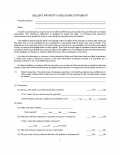 Seller’s Property Disclosure Statement (required) – Sellers are required to complete this property disclosure and provide it to buyers before signing a purchase and sale agreement. Seller’s Property Disclosure Statement (required) – Sellers are required to complete this property disclosure and provide it to buyers before signing a purchase and sale agreement.
Download: PDF |
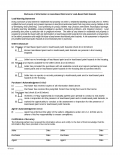 Lead-Based Paint Disclosure (conditional) – If a property is being sold to a buyer, and the property was built before 1978, the seller must provide the buyer with this disclosure form to notify them of any lead-based paint which might be contained in the dwelling.[5] Lead-Based Paint Disclosure (conditional) – If a property is being sold to a buyer, and the property was built before 1978, the seller must provide the buyer with this disclosure form to notify them of any lead-based paint which might be contained in the dwelling.[5]
Download: PDF |
 Lead-Based Paint Pamphlet (conditional) – Gives general information about lead-based paint for properties built before 1978.[6] Lead-Based Paint Pamphlet (conditional) – Gives general information about lead-based paint for properties built before 1978.[6]
Download: PDF |