
Signing Requirements
Either two witnesses or a notary public must witness the signing.[1] Neither witness may be:
- The attending physician or any other physician;
- An employee of the attending physician or health care facility in which the declarant is a patient;
- A person who has a claim against any portion of the estate of the declarant at his or her death at the time the declaration is signed; or
- A person who knows or believes that he or she is entitled to any portion of the estate of the declarant upon the declarant’s death either as a beneficiary of a will in existence at the time the declaration is signed or as an heir at law.

Registration
No statewide registry for advance directives currently exists in Colorado, although the Department of Public Health and Environment is empowered by statute to create one.[2]
Revocation
An advance directive can be revoked orally or in writing by the principal at any time. Revocation can be done by burning, tearing, or destroying the physical form, or by any other act that clearly conveys the principal’s intent to revoke the directive.[3][4]
State Definition
“Advance Directive” means a legal document in which an individual specifies their wishes relating to medical treatment, cardiopulmonary resuscitation, or medical durable power of attorney.[5]
Statutory Form
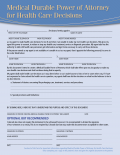
No statutory form, but the Colorado Department of Public Health and Environment does provide a downloadable Medical Durable Power of Attorney form on its website.
Sample
Download: PDF