
Key Features
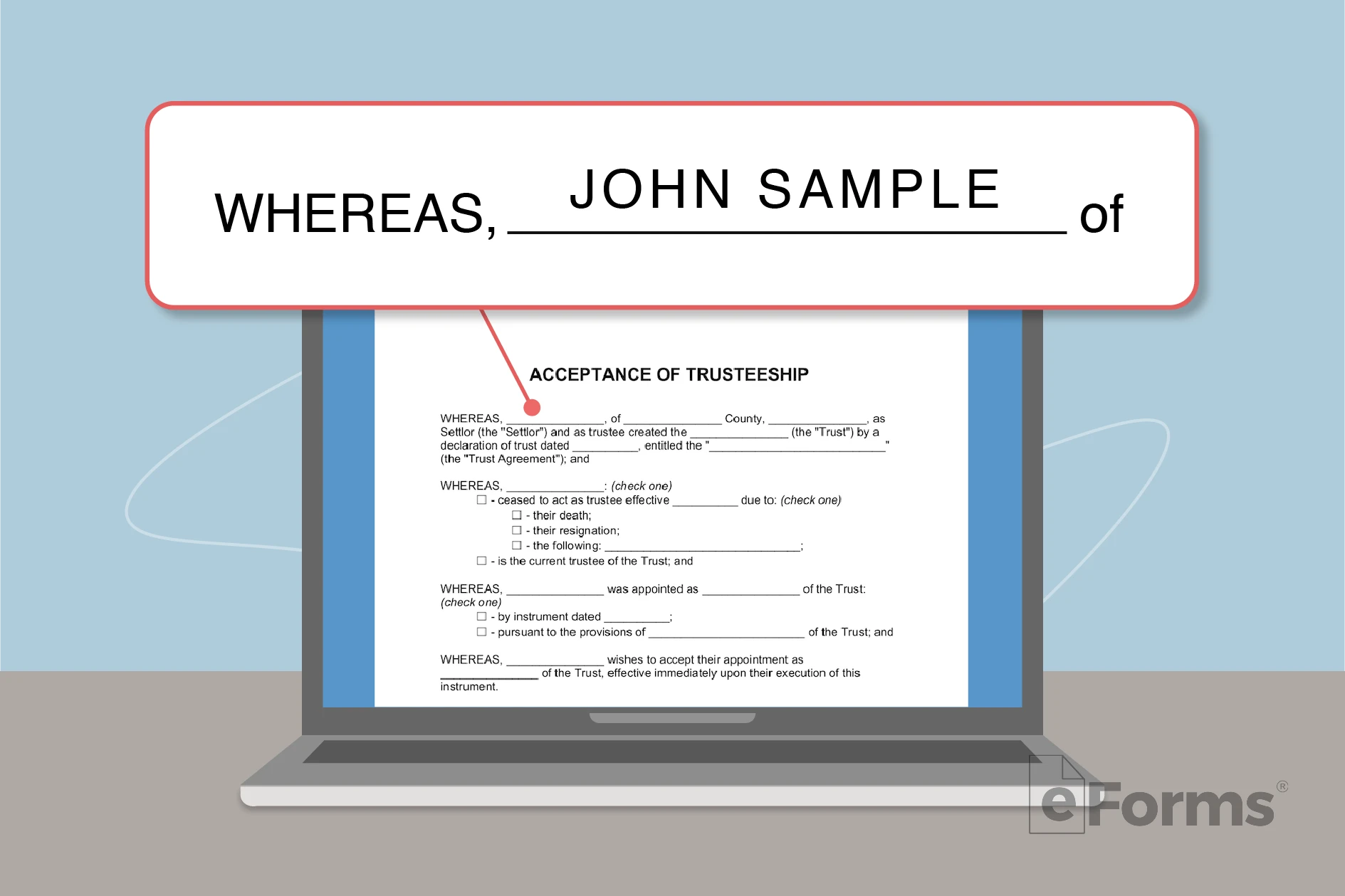
- Settlor and trustee information. Describes the person who initially created the trust and the person who is accepting the appointment as trustee.
- Trust name and creation date. Specifies the trust that will be administered by the trustee.
- Type of trusteeship. Describes whether the trustee will be the initial, successor, or some other form of trustee.
- Appointment method. States how the accepting trustee was appointed to the position.
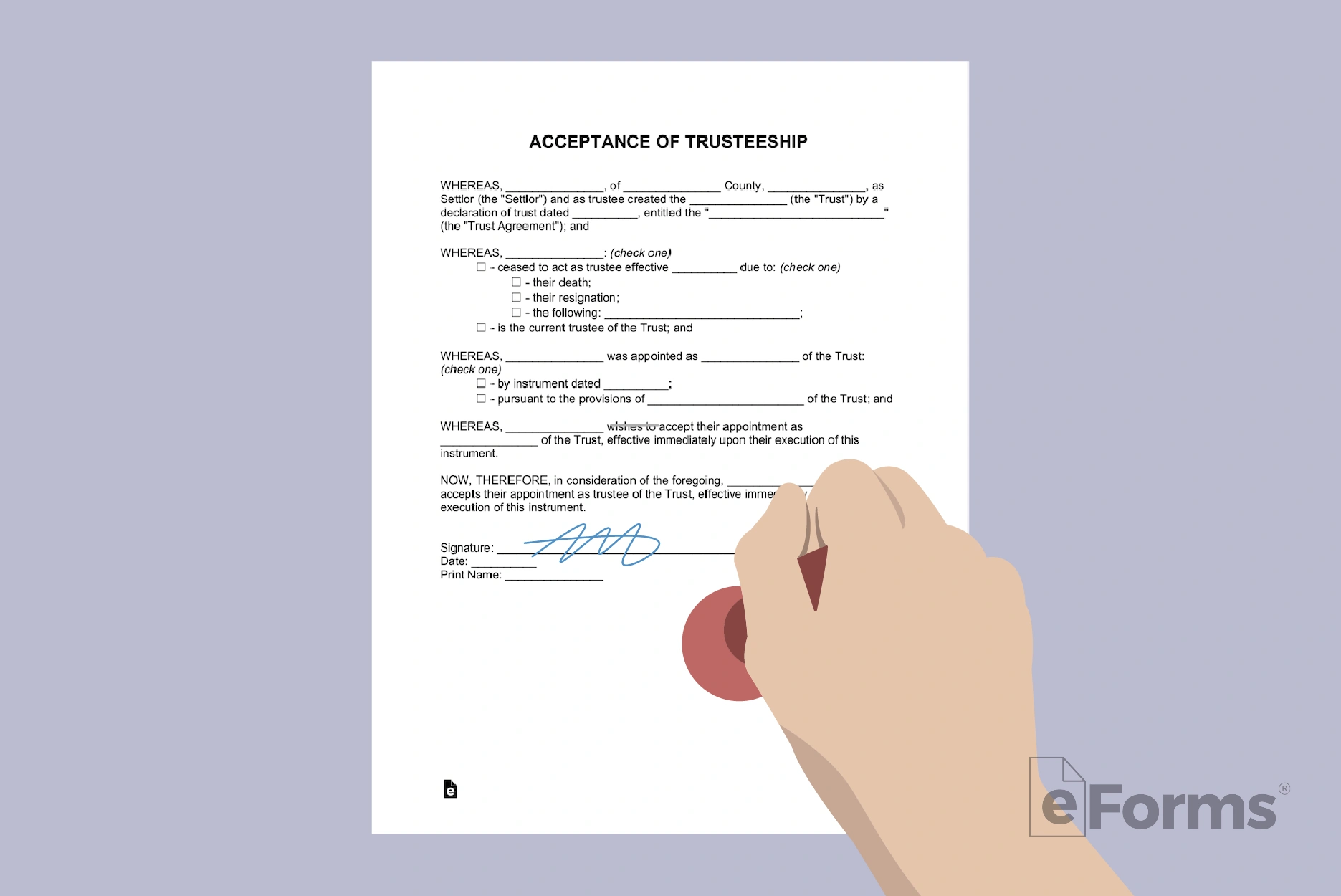
- Signature of trustee. Makes the trustee’s acceptance of the position formal.
How to Write an Acceptance of Trustee Form (4 steps)
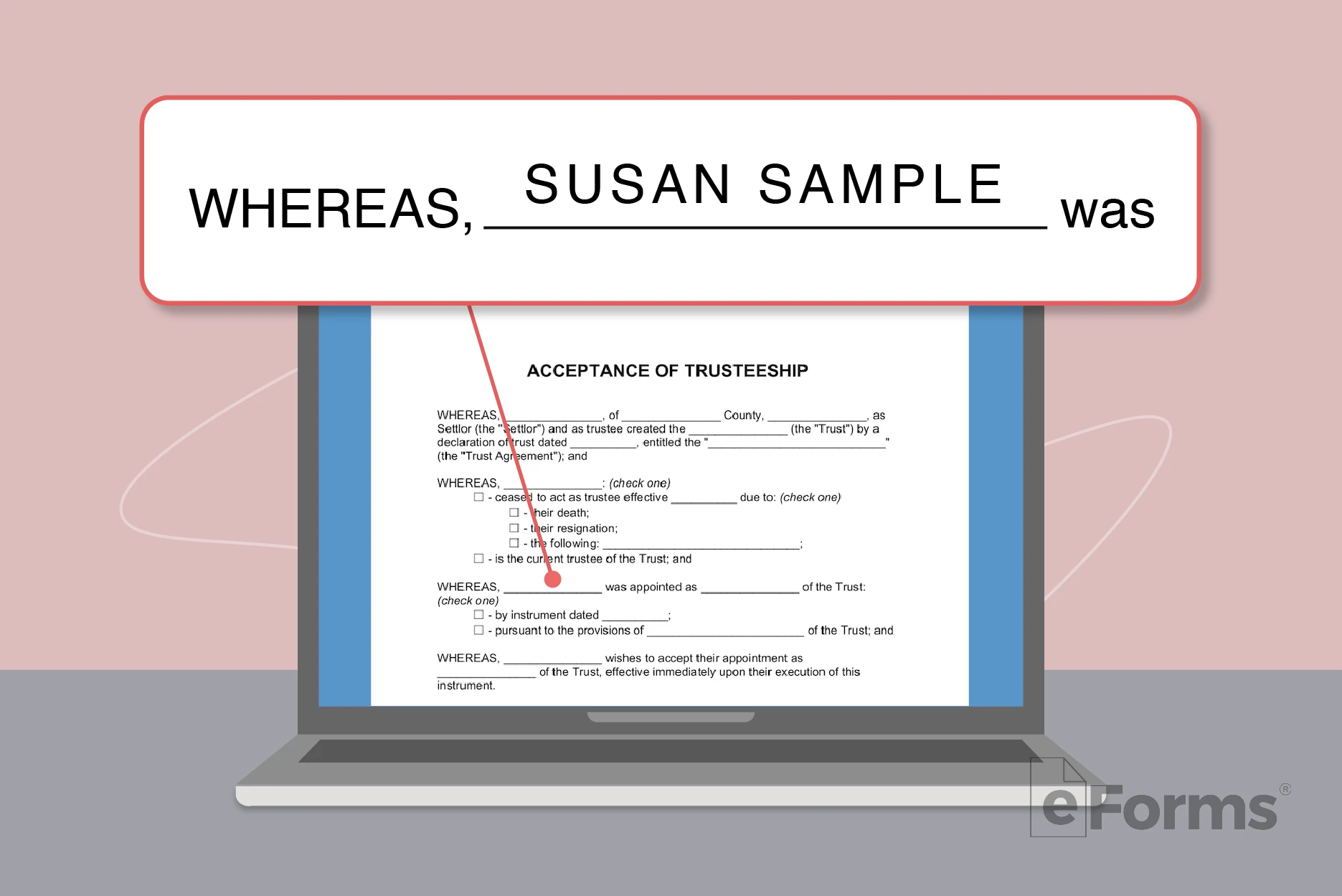
3. Describe the Appointment Method
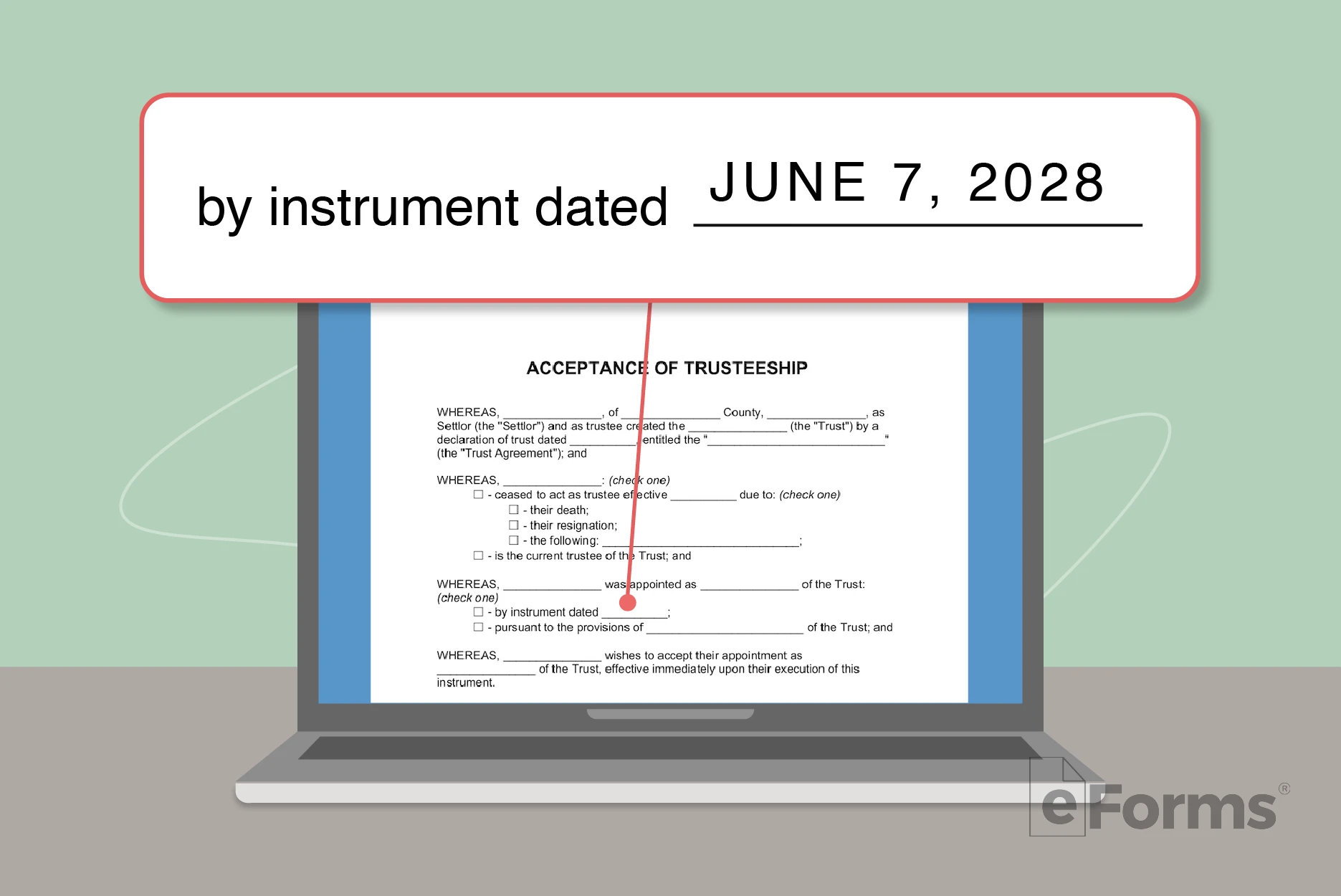
Enter the date when the prospective trustee was originally appointed to the position. The form should also indicate whether their appointment was pursuant to specific provisions of the original trust document.
Frequently Asked Questions (FAQs)
Do I need an acceptance of trustee form?
A written acceptance of trustee form is not always required. Most states simply require that the appointed trustee comply with the method of acceptance provided in the terms of the trust, whatever that method may be.[1]
In any event, a nominated trustee should accept a trusteeship in writing to make their intention to accept clear and evident.
Is there specific language that I need to include?
In most instances, no. However, Ohio state law does require that a trustee appointed by the probate court explicitly acknowledge in writing that they are subject to removal or possible penalties, based on their actions as trustee.[2]
How do I reject an appointment as trustee?
The best method for rejecting an appointment as trustee is to draft a formal declination of trusteeship and send it to the settlor or current trustee.