
Key Features
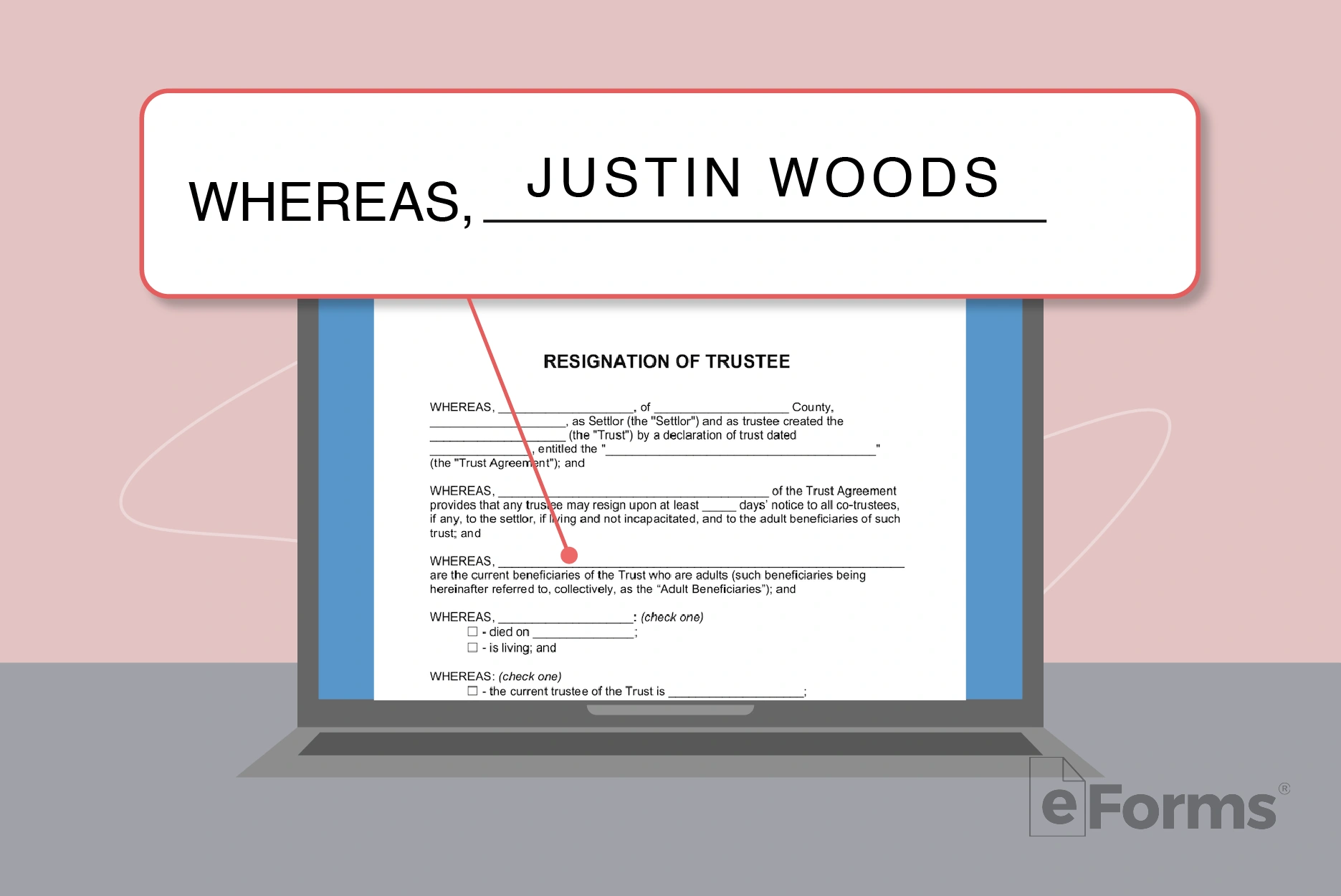
- Settlor and trustee information. Describes the person who initially created the trust (the settlor) and the person who is resigning as trustee.
- Beneficiary names. Identifies the current beneficiaries of the trust.
- Trust name and creation date. Specifies and identifies the relevant trust.
- Resignation of trusteeship. Notifies the interested parties of trustee’s resignation and provides specific advanced notice, if necessary.
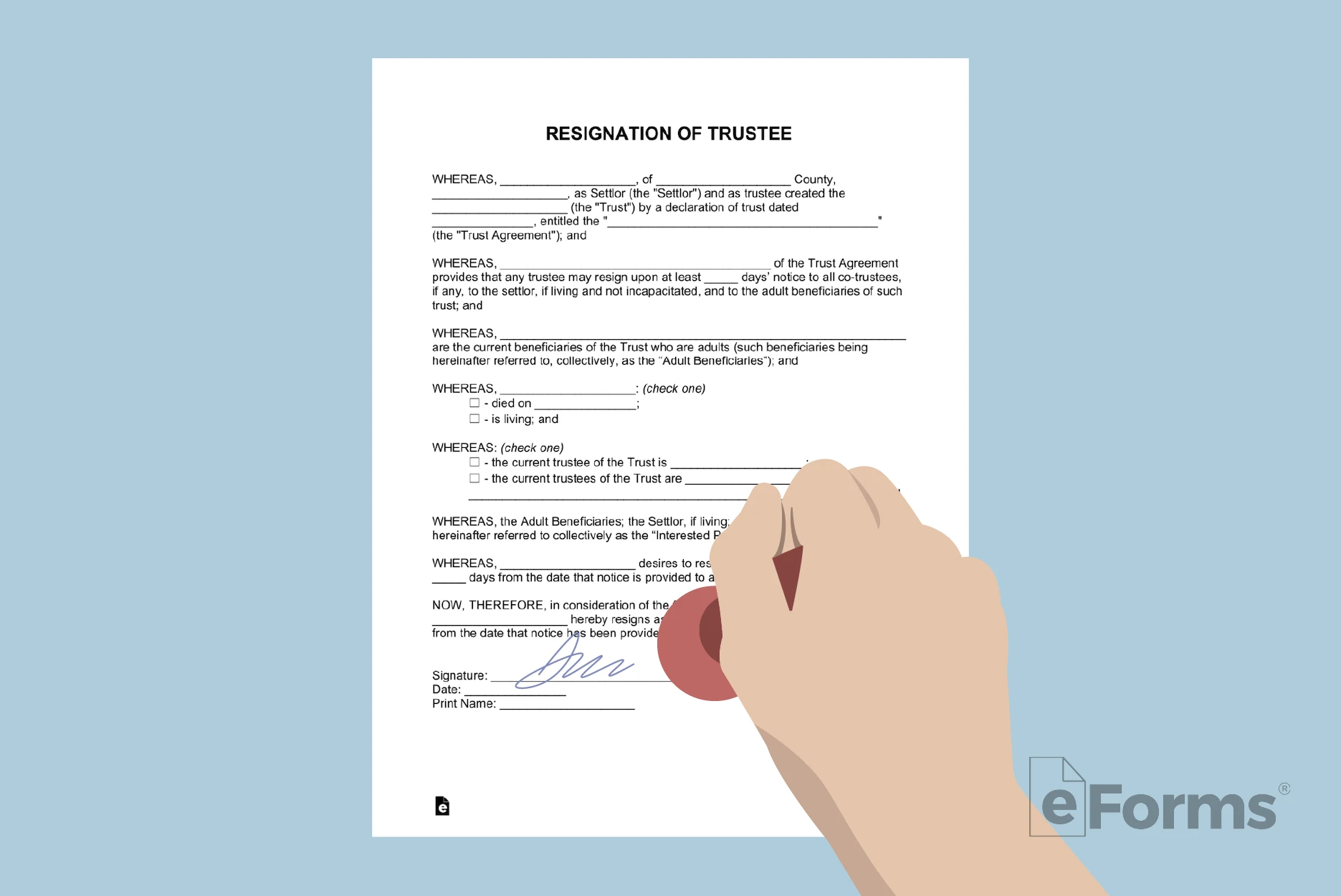
- Signature of trustee. Formalizes the trustee’s official resignation of the position.
How to Write a Resignation of Trustee Form (4 steps)
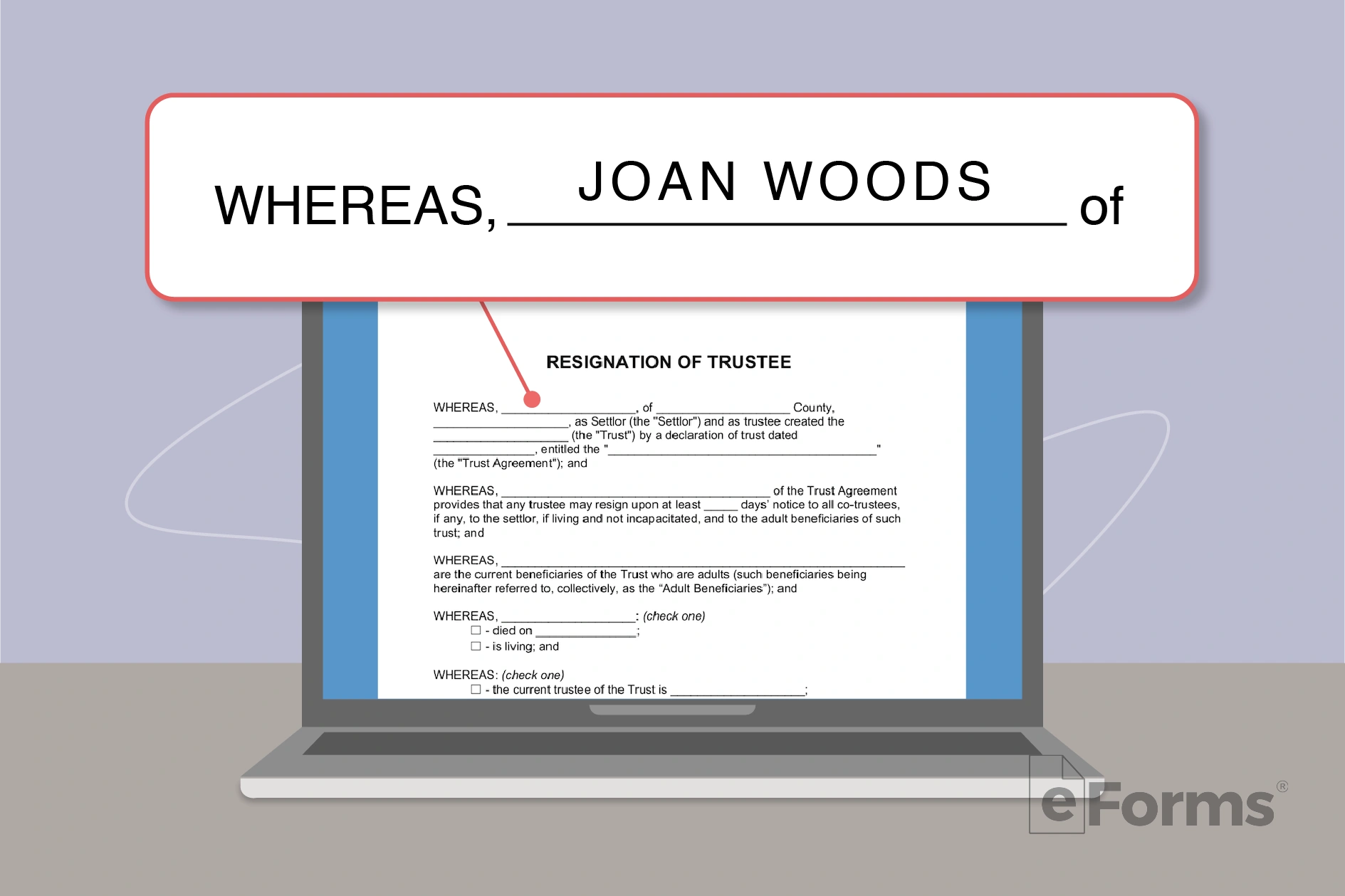
2. Follow Resignation Procedures of the Trust
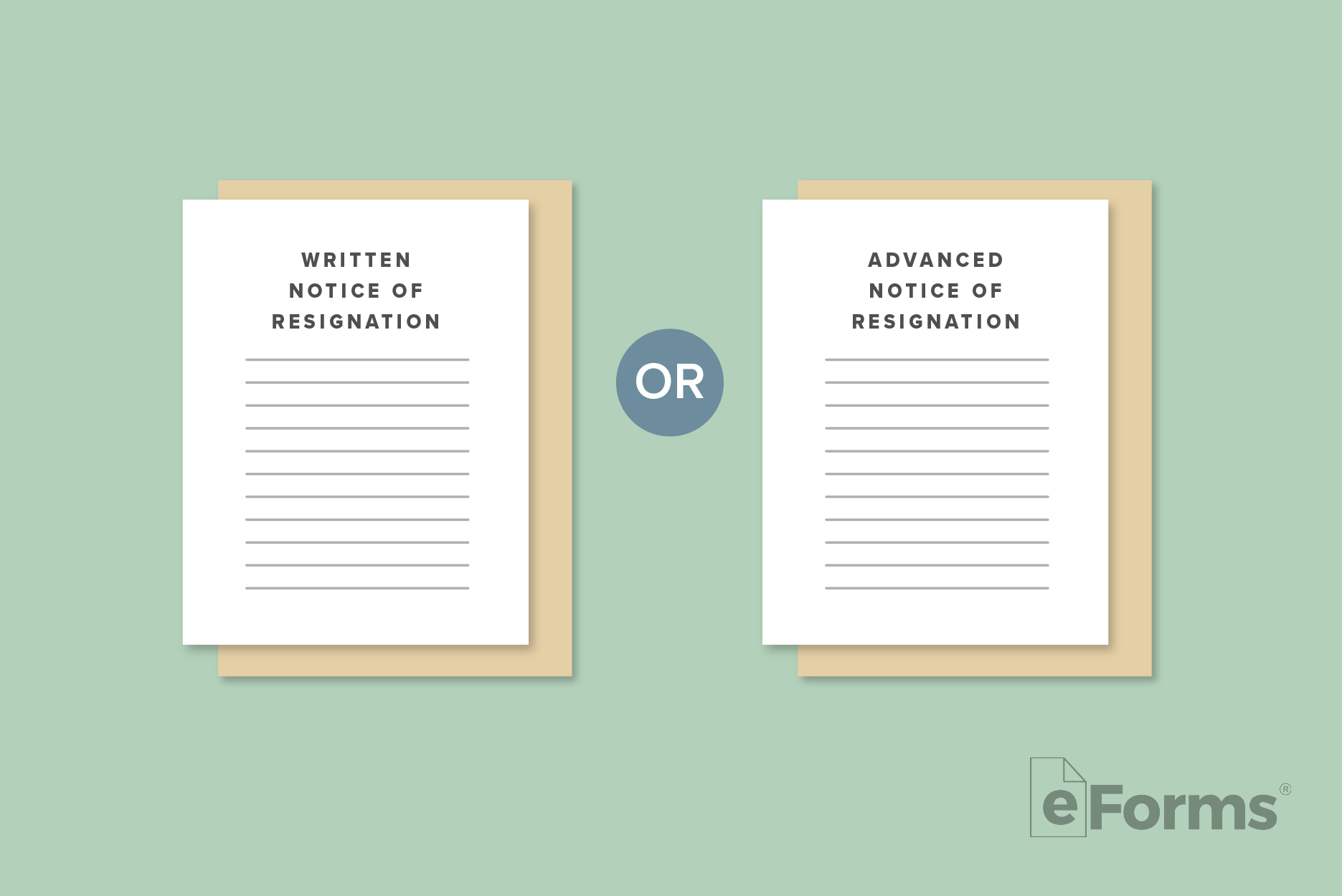
All trusts aren’t created equally. Some trusts may require a trustee to issue a written notice of resignation to some or all of the interested parties. Similarly, some trusts may require advanced notice of the written resignation. In any case, the trust document usually outlines any required writing, minimum notice period, and other procedures to follow in resigning.
Frequently Asked Questions (FAQs)
Does a trustee need court approval to resign?
In most states, court approval is not always necessary. If the resigning trustee of a revocable trust gives 30 days’ notice to the interested parties, that is usually sufficient.[1]
However, the resignation process must always follow both state law and the terms of the trust instrument.
Are there any other steps the resigning trustee must take?
In addition to giving formal notice of their intent to resign, the trustee should prepare a final accounting of the trust’s finances and transfer any relevant records to the next trustee. This helps ensure transparency and a smooth transition process.
Does resigning relieve a trustee of any liability?
No, the trustee is still liable for actions taken while managing the trust, even after they have resigned.[2]