
State Laws
Seller Duties – The seller is required to provide a written disclosure statement to the buyer prior to executing a purchase agreement if a real estate agent represents either party in the transaction and if the property is for a dwelling of four units or fewer.[1]
Disclosure Exceptions – This requirement does not apply if the property transfer is:[2]
- Pursuant to a court order;
- Between government agencies;
- By a mortgagor in default to a mortgagee;
- Pursuant to a foreclosure sale;
- By a mortgagee or a beneficiary of a deed of trust who acquired the real property
by a foreclosure, a deed in lieu of foreclosure; or a collateral assignment of beneficial interest; - By a fiduciary administering a decedent’s estate, guardianship, conservatorship,
or trust; - Between co-owners of the real property;
- To a spouse, child, parent, sibling, grandchild, or grandparent; or
- If the real property is newly constructed residential real property with no previous
occupancy
Seller’s Disclosures (3)
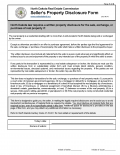 Seller’s Property Disclosure Statement (conditional) – A disclosure statement must be provided by the seller to the buyer before an agreement is authorized. Seller’s Property Disclosure Statement (conditional) – A disclosure statement must be provided by the seller to the buyer before an agreement is authorized.
Download: PDF |
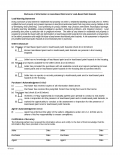 Lead-Based Paint Disclosure (conditional) – Federal law requires that an individual who is purchasing a residence constructed before the year 1978 must be given a statement that details the use of any lead-based paint on the property.[3] Lead-Based Paint Disclosure (conditional) – Federal law requires that an individual who is purchasing a residence constructed before the year 1978 must be given a statement that details the use of any lead-based paint on the property.[3]
Download: PDF |
 Lead-Based Paint Pamphlet (conditional) – Gives general information about lead-based paint for properties built before 1978.[4] Lead-Based Paint Pamphlet (conditional) – Gives general information about lead-based paint for properties built before 1978.[4]
Download: PDF |