
How to Apply
- Online: ohio.gov/business
Filing Fees
- Domestic: $99[1]
- Foreign: $99
How to Form an LLC
1. Find a Business Name
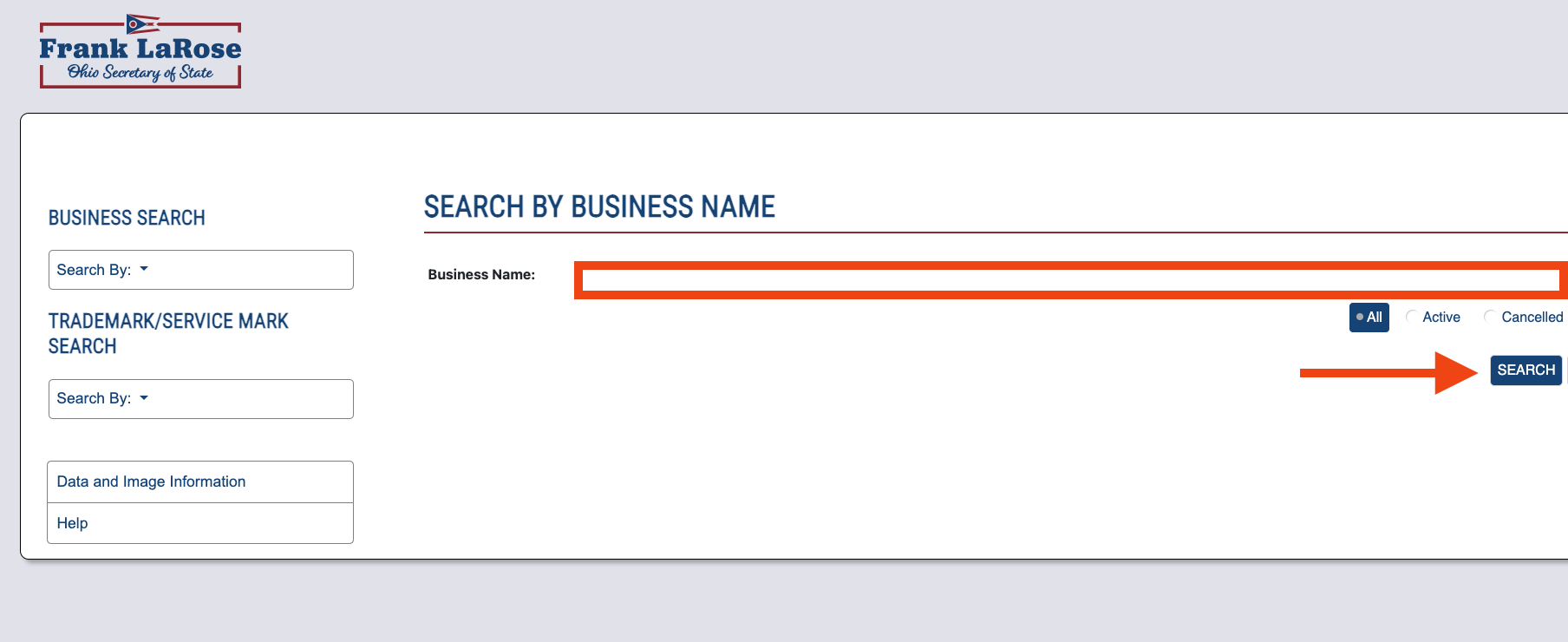
- Business Search: businesssearch.ohiosos.gov
Use the Secretary of State’s Business Search engine to check whether your desired LLC name is already being used. If no other business is currently using the name, the words “no data available” will appear.
The name of your business must contain the words “limited liability company” or abbreviations “L.L.C.,” “L.C.,” or “Ltd.”[2]
2. Select a Registered Agent
All LLCs in Ohio must appoint a registered agent who will accept service of process on behalf of the business. The registered agent must be an Ohio resident or a business entity that has a business address in the state.[3]
3. Register the LLC
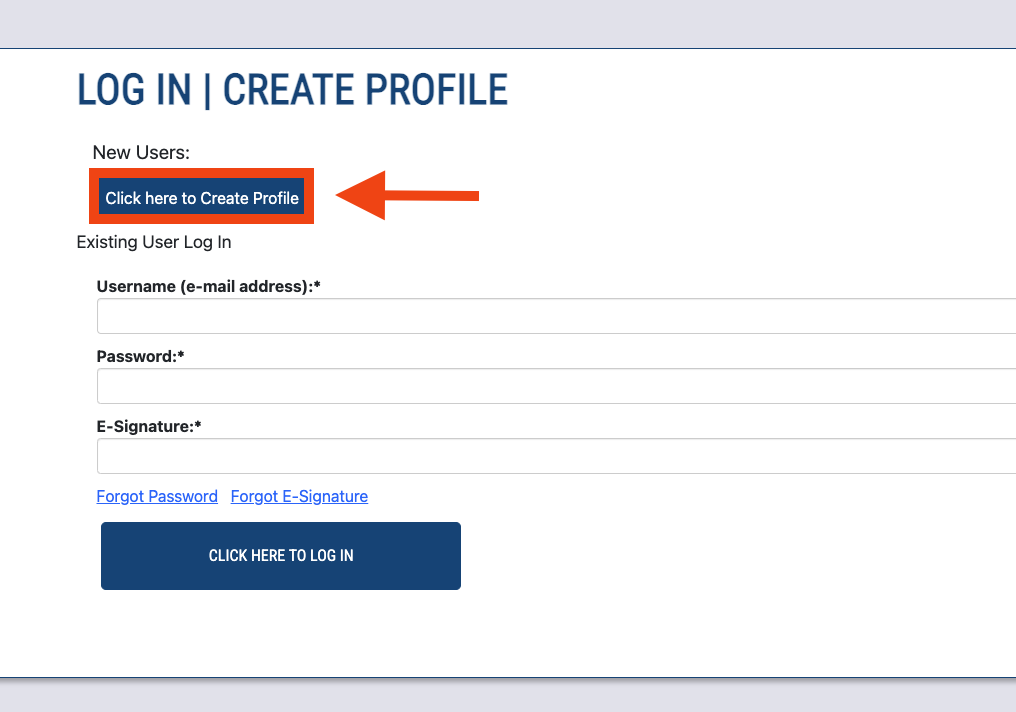
Go to bsportal.ohiosos.gov to access the state’s online filing system.
To create a new profile, enter your name, mailing address, email address, and phone number. Once your account is created, log onto your dashboard.
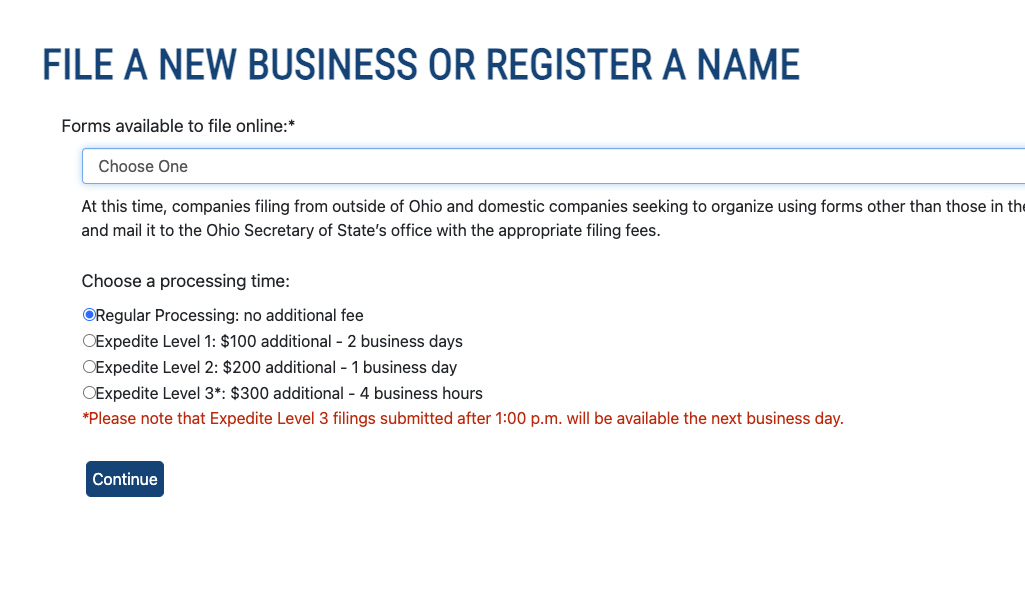
After clicking “File a New Business,” select the form for Limited Liability Company and choose a processing time.
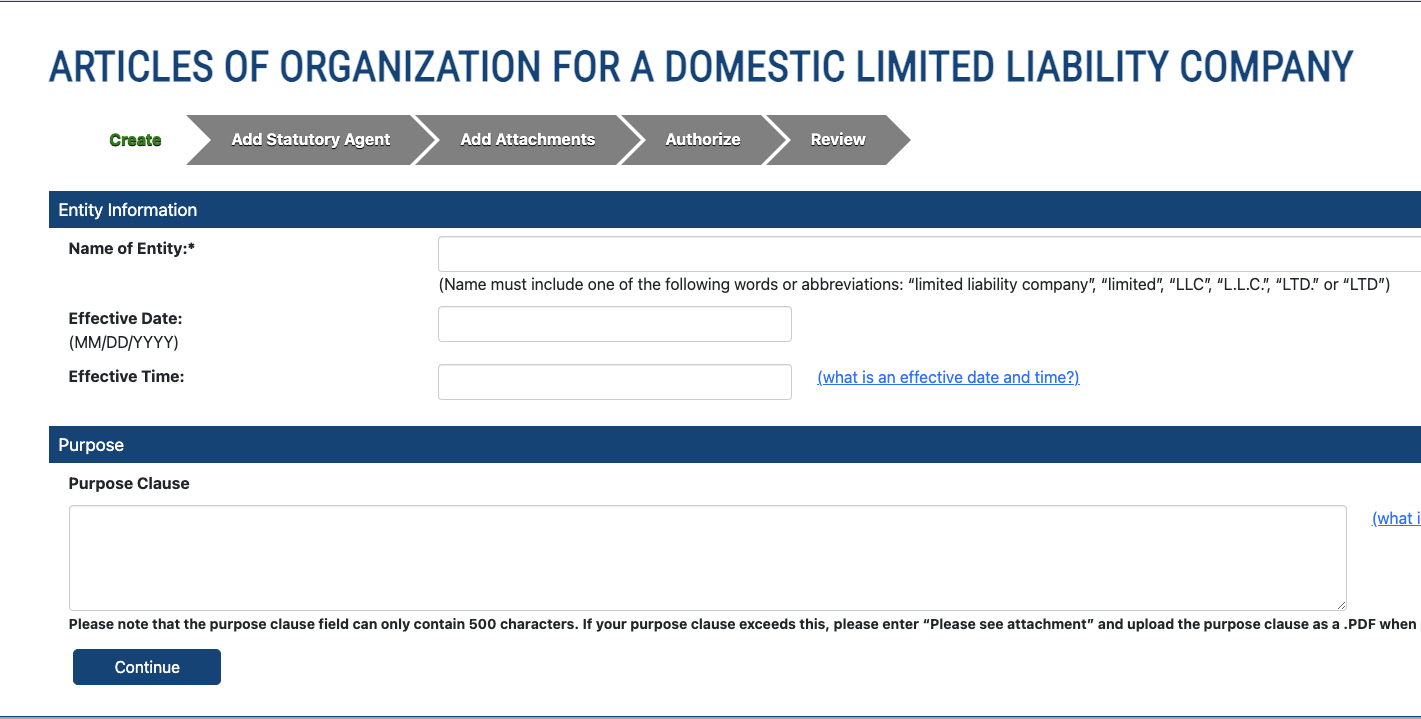
Enter your business name and select the effective date and time of the Articles of Organization. Below that, provide a brief description of your business purpose.
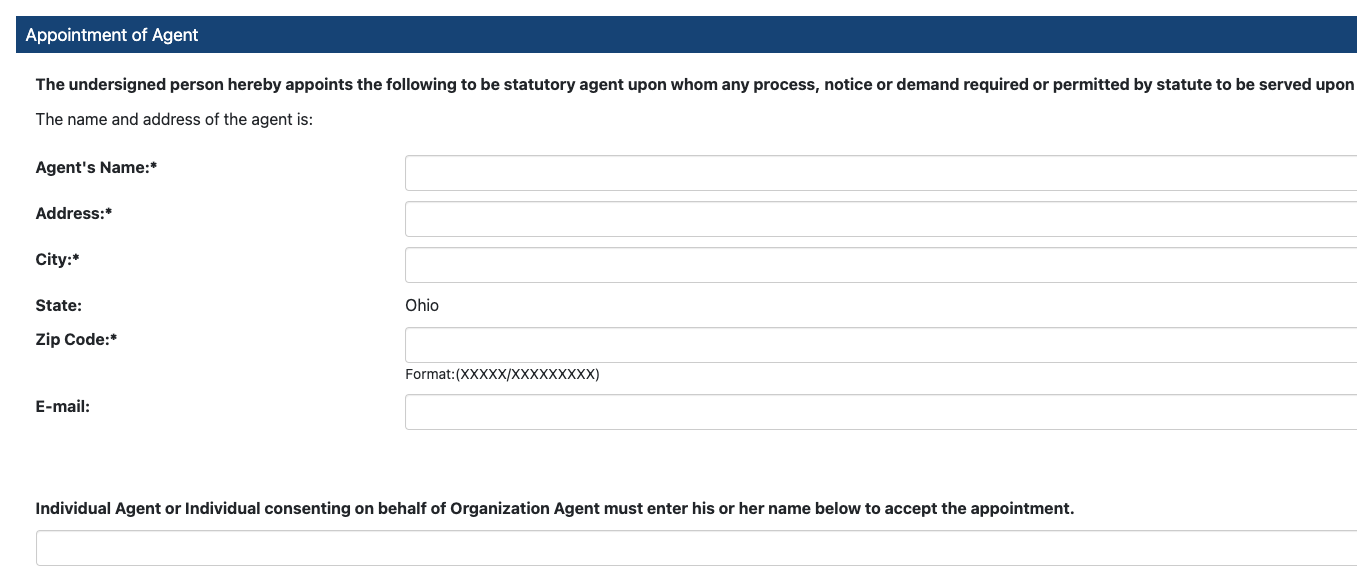
Provide the name, address, and email of the statutory agent for your business. The agent must also provide an electronic signature.
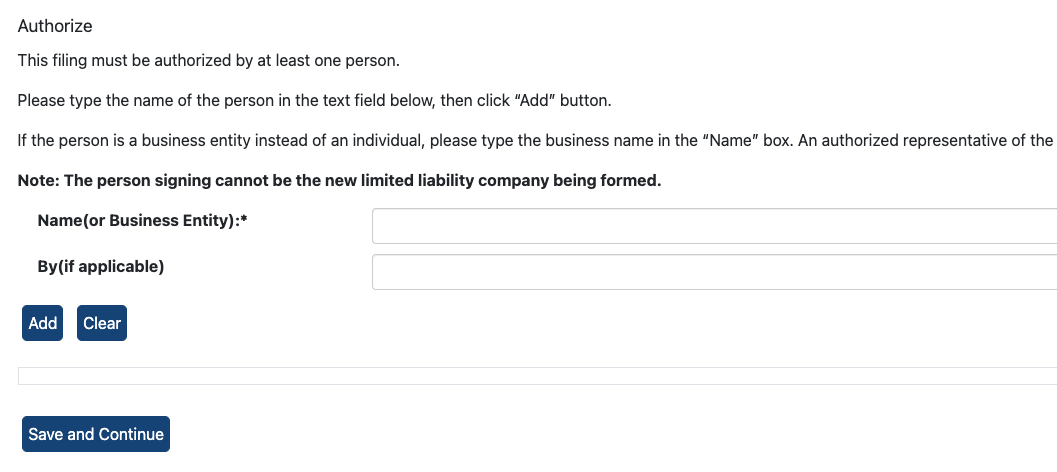
Enter the name of the person authorizing this filing. Review your completed document and provide a payment method to pay the filing fee of $99.
4. Obtain an EIN
- Apply Online: www.irs.gov
- Apply by Fax/Mail: Form SS-4
Apply for an Employer Identification Number (EIN) with the IRS in order to begin operating your business.
5. Write an Operating Agreement
While operating agreements are not legally required for LLCs in Ohio, it is still recommended to create and adopt one for internal purposes.
Download: PDF, MS Word, OpenDocument
6. Choose a Tax Classification
Below are the most common types of LLC tax classification:
- LLC – As an LLC, a sole proprietorship or partnership is considered a “pass-through entity,” which means all profits are taxed as income for the members/owners.
- S-Corporation – All business profits and losses are sent to the shareholders, who must pay income tax. To file as an S-corp, an LLC must file IRS Form 2553 within 75 days of formation.
- C-Corporation – All business profits and losses are filed as a separate corporate entity. To file as a C-corp, an LLC must file IRS Form 8832 within 75 days of formation.