
How to Form an LLC
1. Find a Business Name
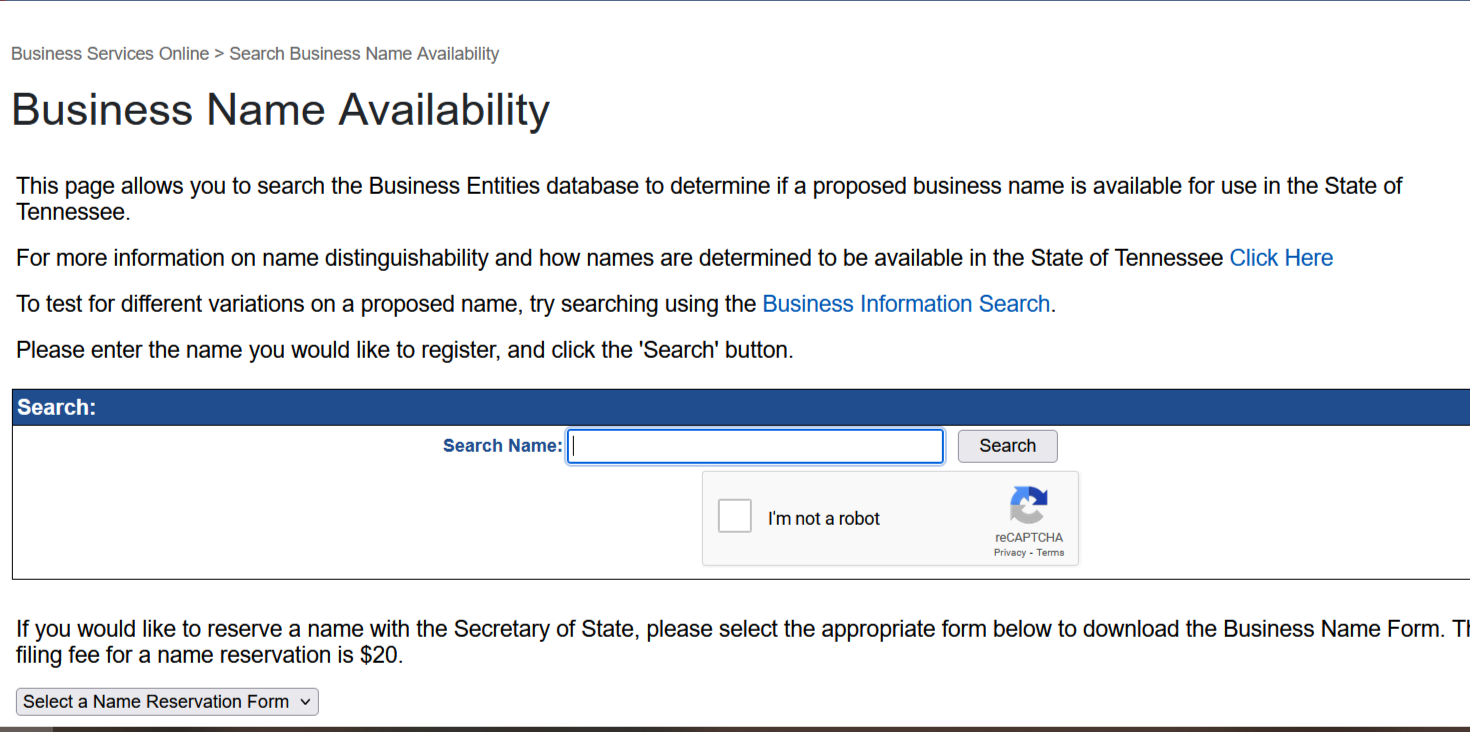
- Business Search: www.tnbear.tn.gov
Search the Secretary of State’s Business Entities database to check if your proposed LLC name is available. If no other business in the database is using that name, the words “No Matches Found” will appear below the search bar.
The name of your LLC must contain “limited liability company,” “L.L.C.,” or “LLC,” or words or abbreviations in another language with similar meaning. The business name must not contain the words “corporation” or “incorporated.”[2]
2. Select a Registered Agent
Each domestic and foreign LLC in Tennessee must continuously maintain a registered agent in the state. The agent must either be an individual resident or a corporation, partnership, or LLC authorized to do business in Tennessee.[3]
3. Register the LLC
There are two options for the registration of your LLC: online or by mail.
Option 1: File Online
Go to www.tnbear.tn.gov/ecommerce to form or register a new business online.
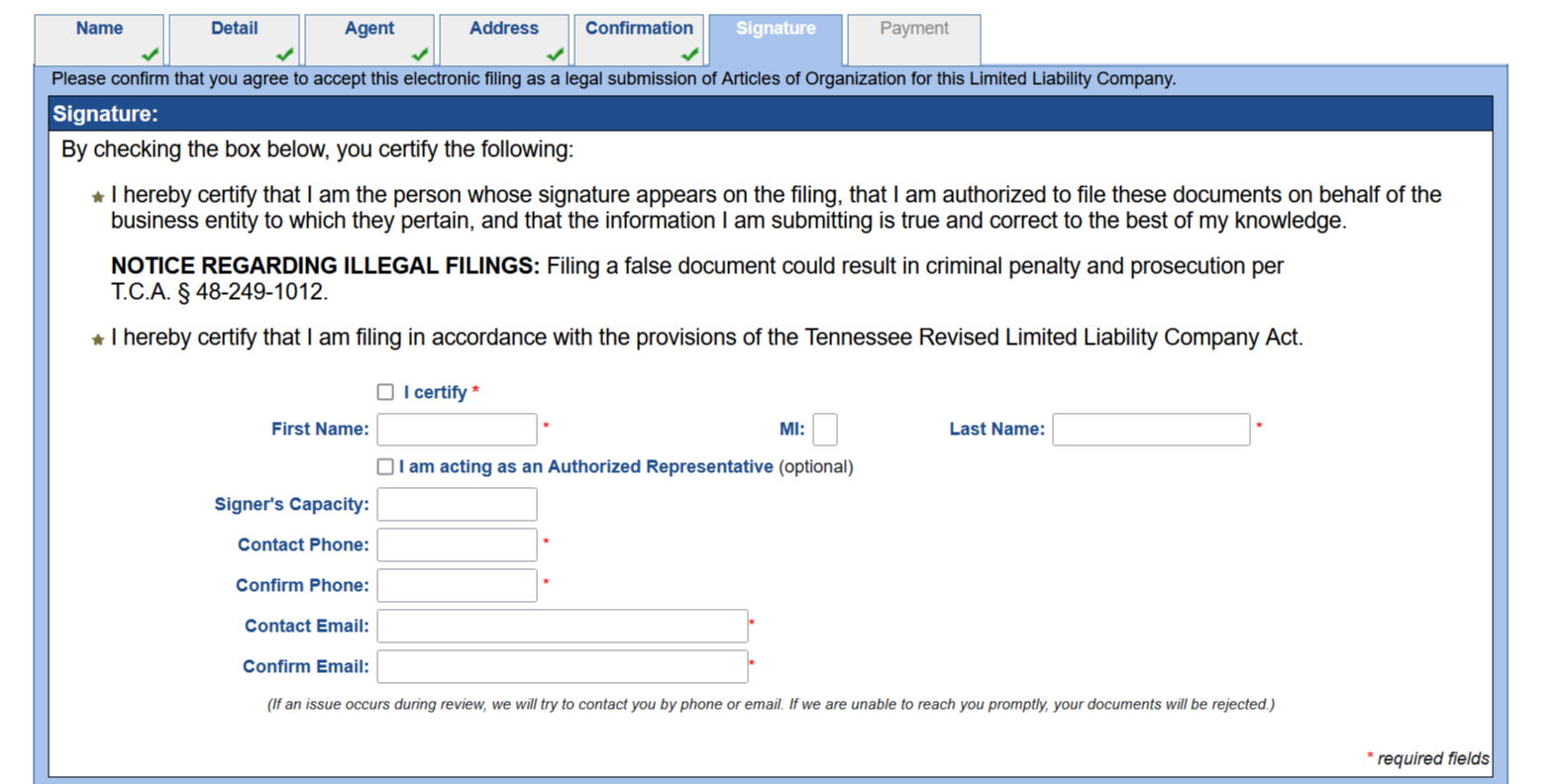
You will also have to check the checkbox to attest that the information you enter on the form is accurate and that you understand it will be publicly available.

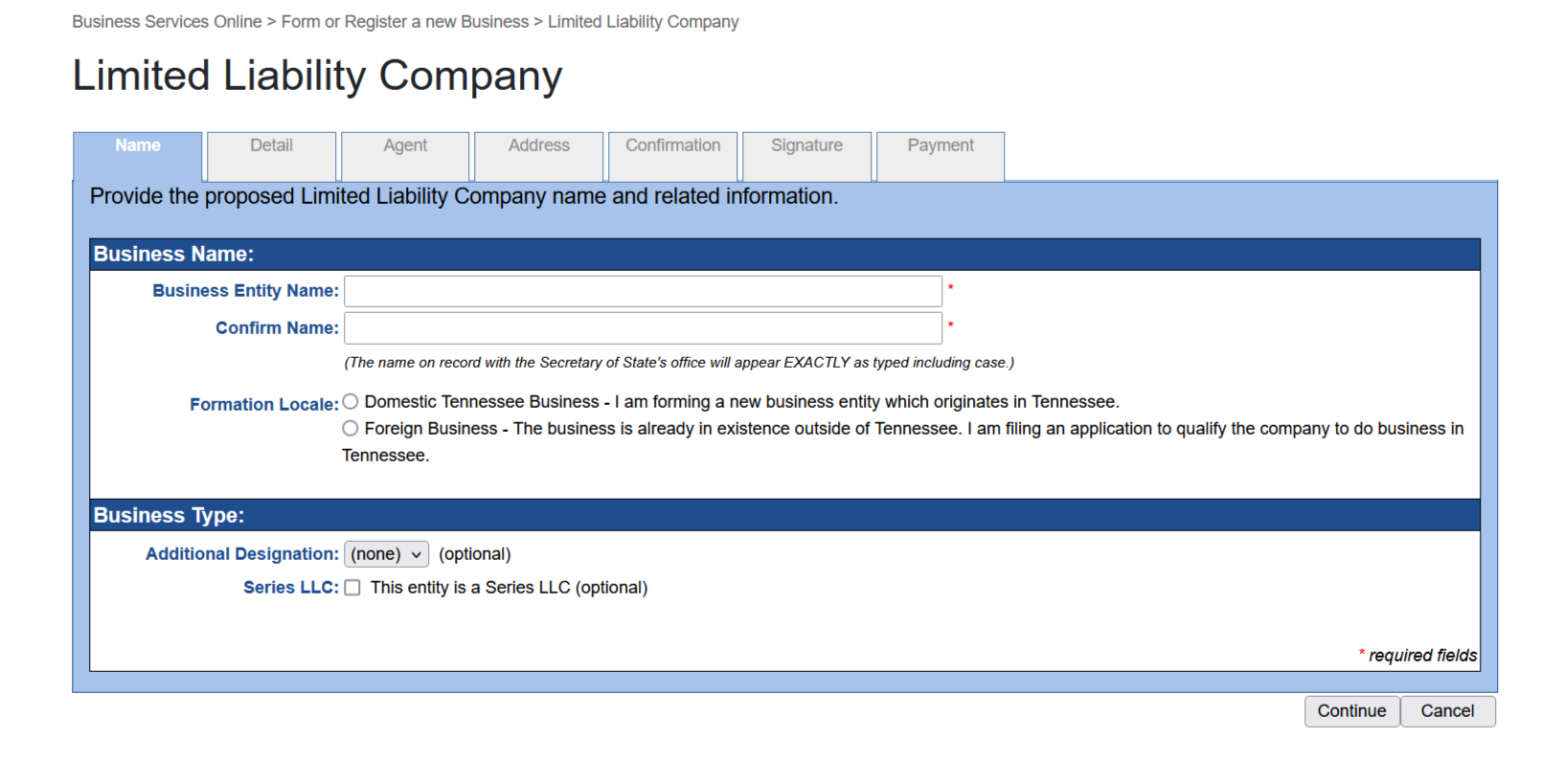
Enter the name of your LLC, making sure that it adheres to the naming requirements outlined above. Then, indicate whether it is a domestic or foreign business.
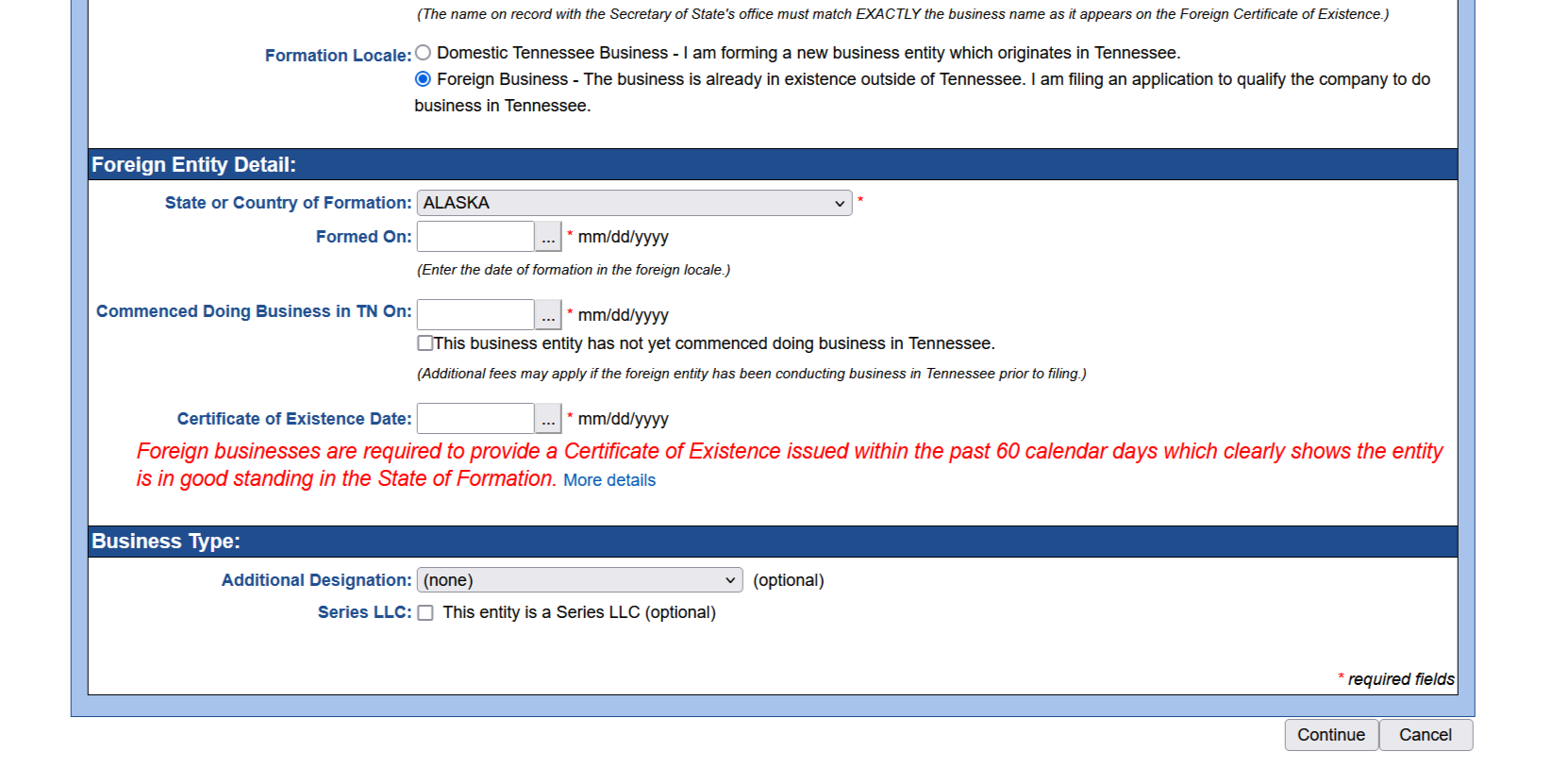
 If yours is a foreign LLC, add the relevant formation details as prompted.
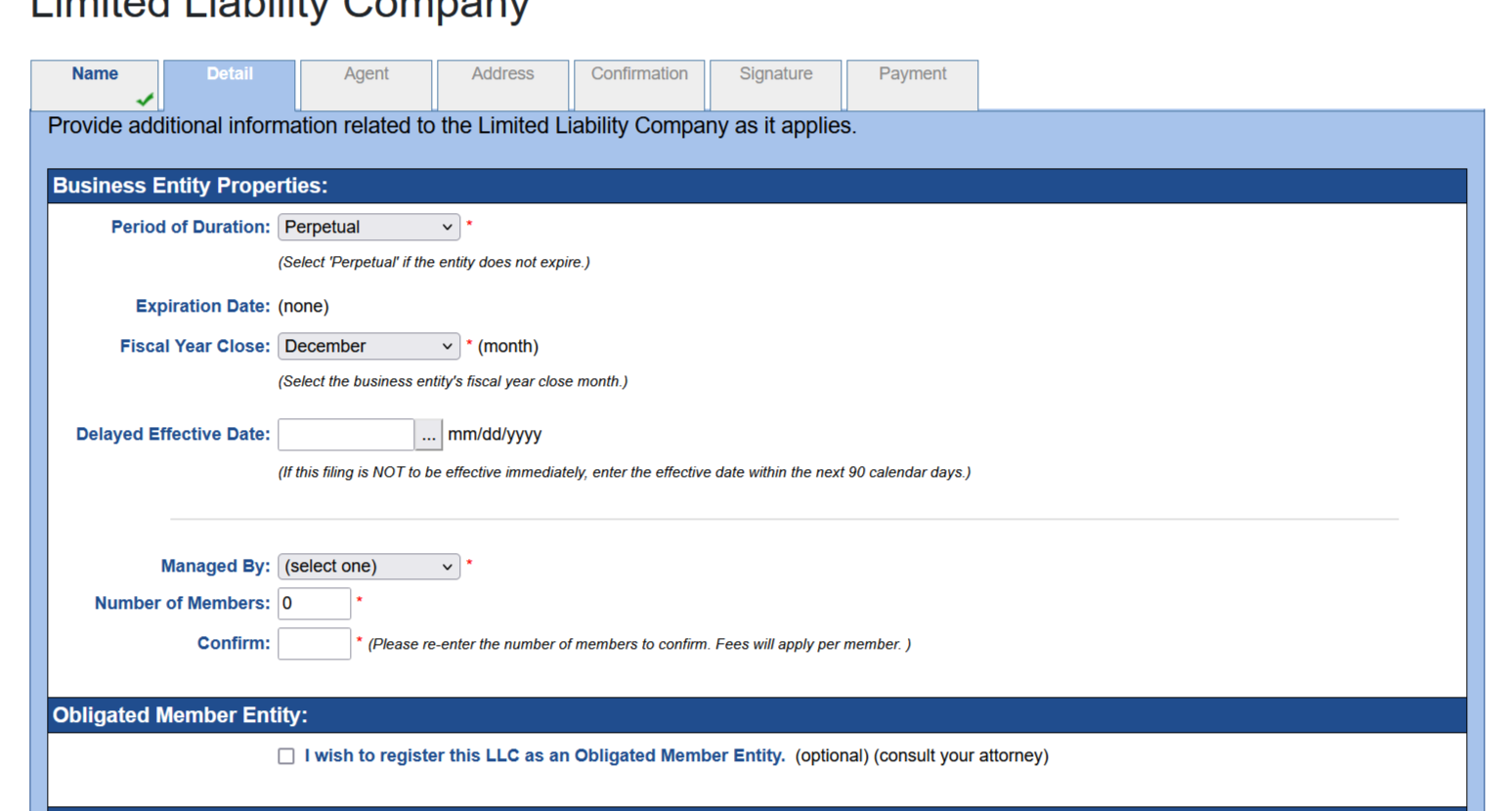
The fee for filing your LLC will be determined by the number of members you enter. You can also choose to delay the effective date of your filing if desired.
If you will not be using a separate registered agent, indicate at the top of the screen that your business will represent itself.
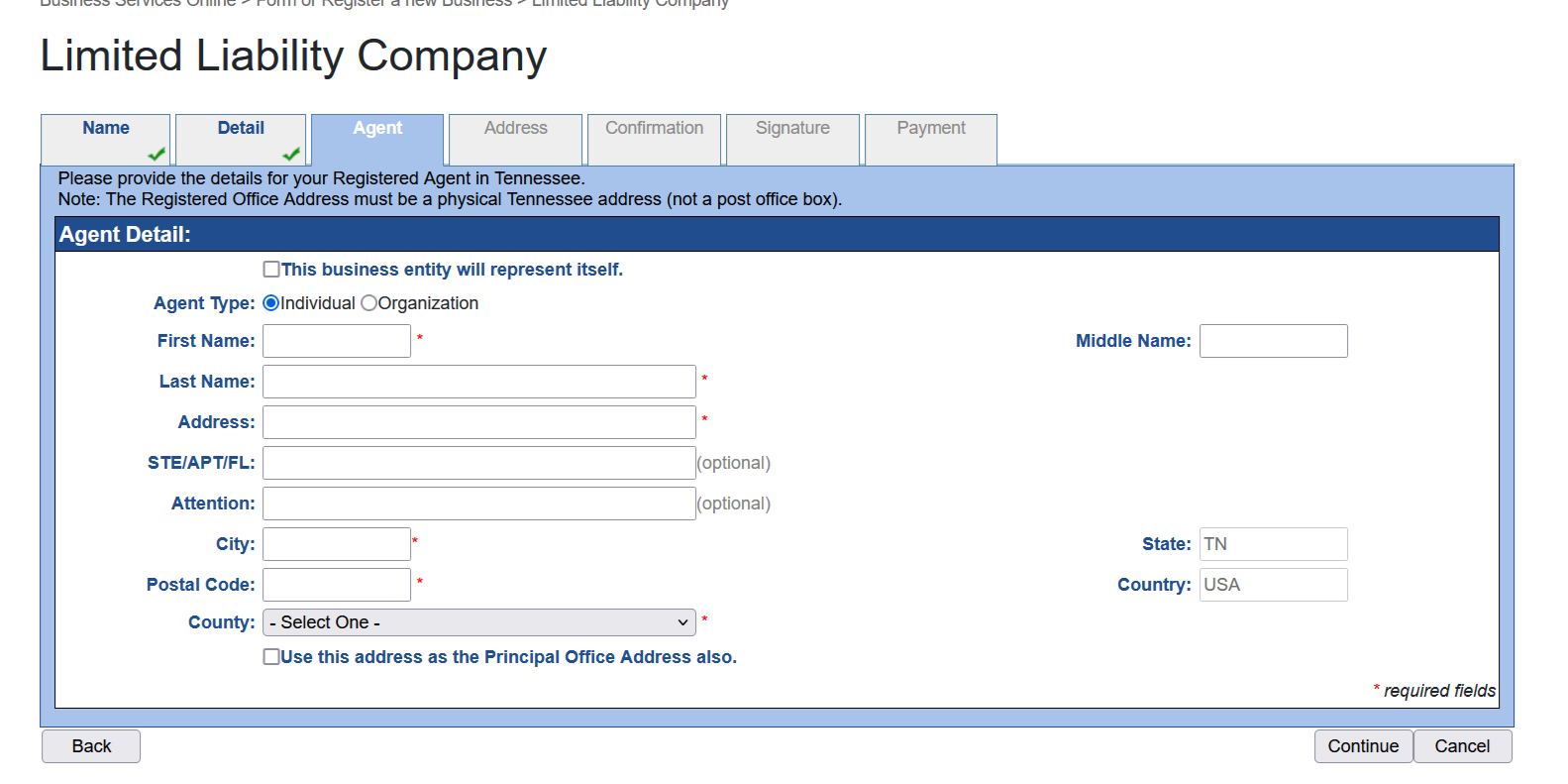
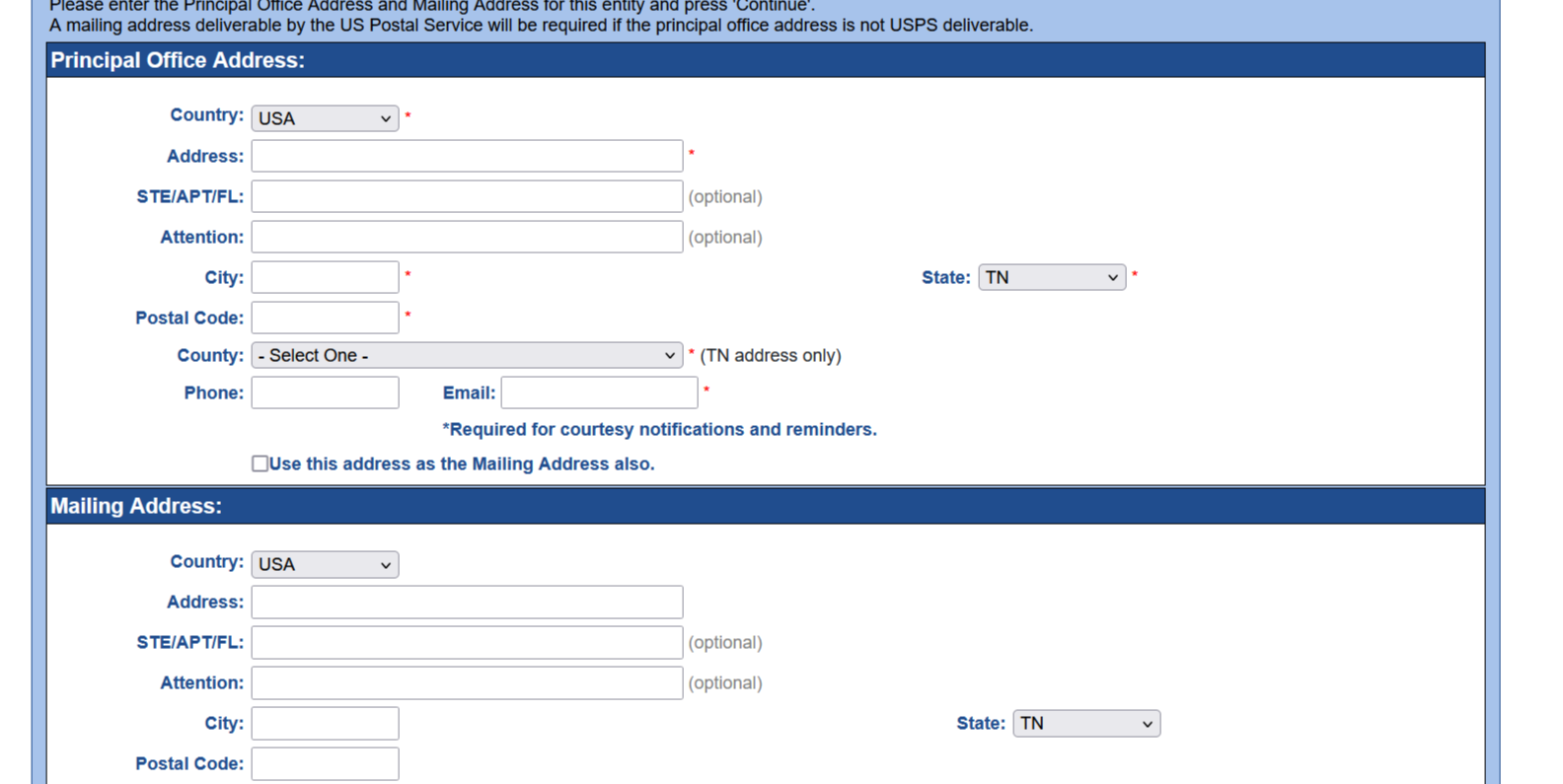
If the principal office address will also be the mailing address of your business, select the checkbox in the middle of the screen.
After confirming the information entered into the form, you will need to sign and certify the document before you can submit it. Once you have submitted payment for the filing fee, your documents will be automatically filed and recorded.
Option 2: File By Mail
Complete the appropriate form and send the document, along with a check or money order, to the Tennessee Secretary of State.
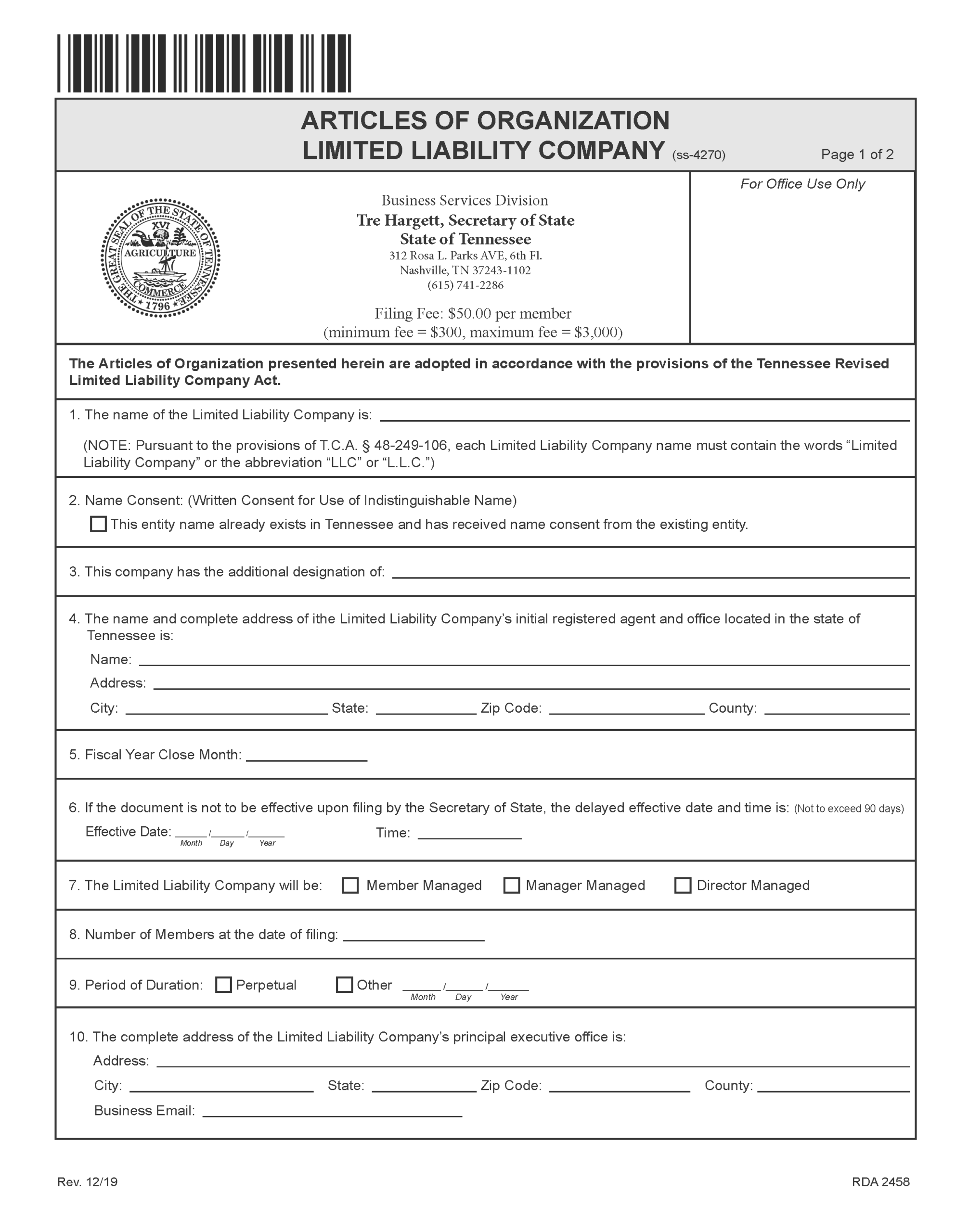 Articles of Organization – Domestic LLC – For in-state entities.
Filing fee: $300+ (depending on the number of members) check or money order payable to the Tennessee Secretary of State.
Mailing address: Secretary of State, 6th FL – Snodgrass Tower ATTN: Corporate Filing, 312 Rosa L. Parks AVE, Nashville, TN 37243
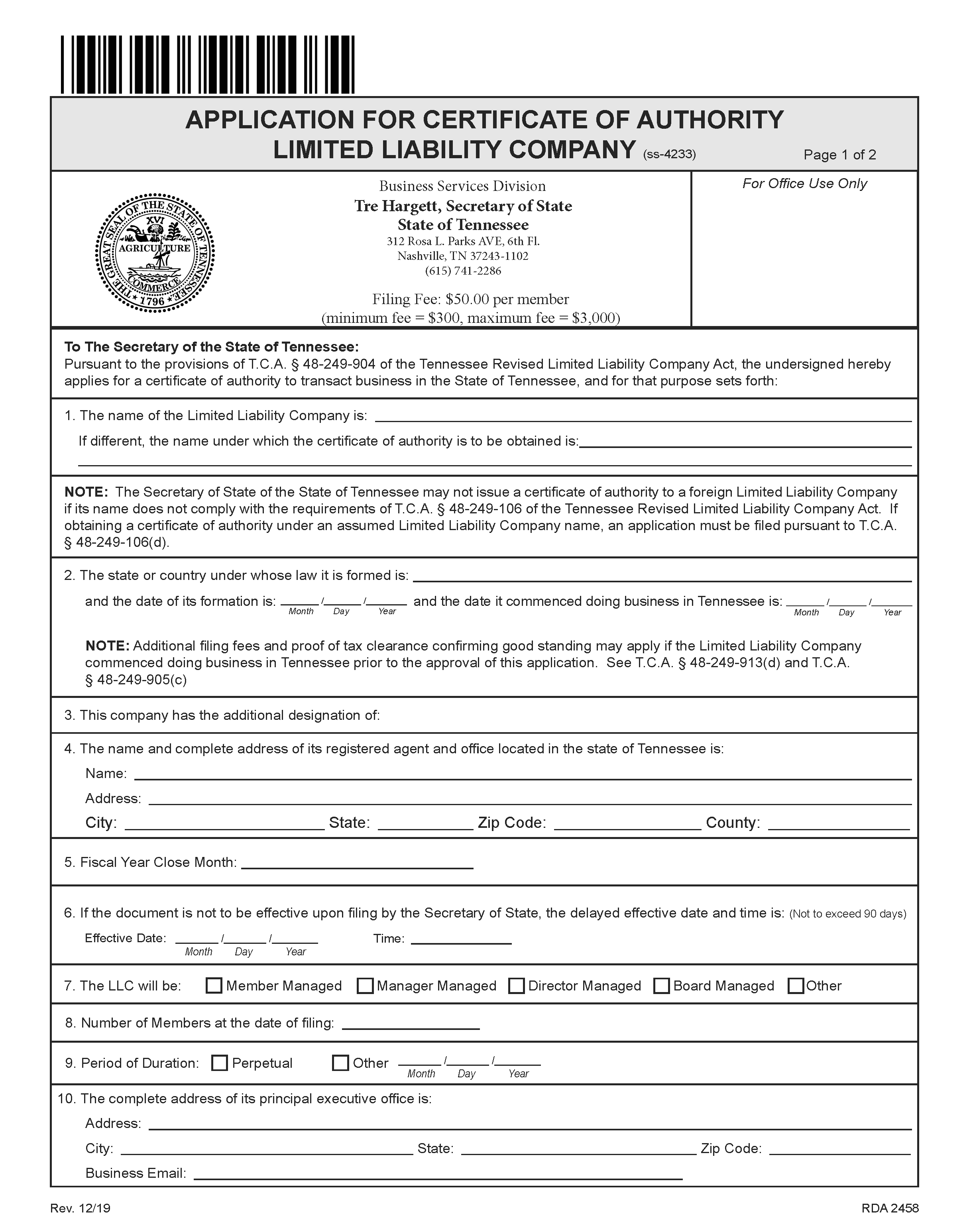 Application for Certificate of Authority – Foreign LLC – For out-of-state entities.
Filing fee: $300+ (depending on the number of members) check or money order payable to the Tennessee Secretary of State.
Mailing address: Secretary of State, 6th FL – Snodgrass Tower ATTN: Corporate Filing, 312 Rosa L. Parks AVE, Nashville, TN 37243
4. Obtain an EIN
- Apply Online: www.irs.gov
- Apply by Fax/Mail: Form SS-4
Any LLC with employees must apply for an Employer Identification Number (EIN) from the Internal Revenue Service to conduct business in Tennessee.[4]
5. Write an Operating Agreement
Tennessee does not legally require that an LLC have an operating agreement, although drafting such a document is generally recommended for most companies. The agreement establishes an LLC’s structure and how the business will be run.
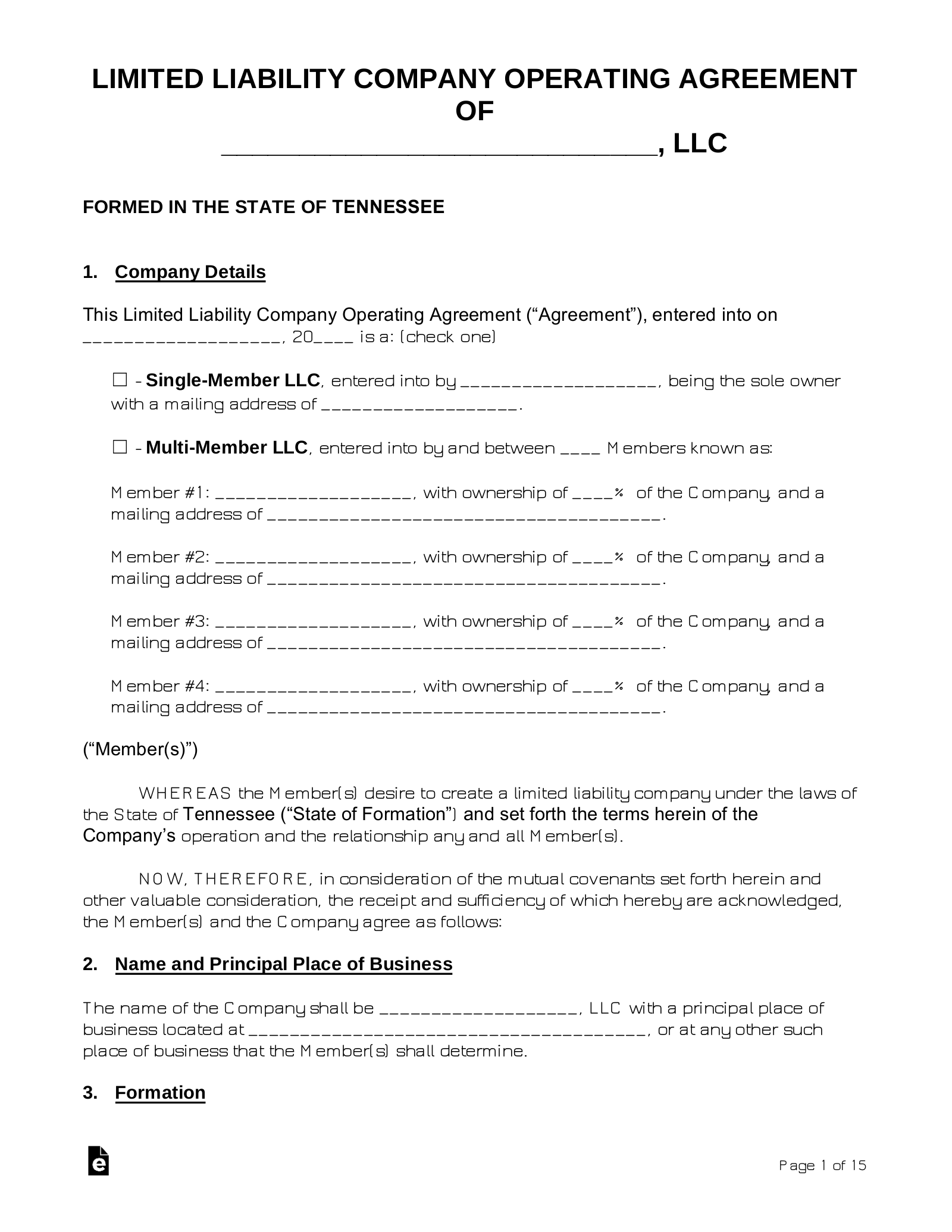
Download: PDF, MS Word, OpenDocument
6. Choose a Tax Classification
The most common types of tax classification for an LLC are:
- LLC – Under an LLC classification, a sole proprietorship or partnership is considered a “pass-through entity,” and its profits are taxed as income for the owners/members.
- S-Corporation – In an S-corp, shareholders receive and pay income tax on all business profits and losses. To file as an S-corp, an LLC must submit IRS Form 2553 within 75 days of formation.
- C-Corporation – As a C-corporation, profits and losses are filed as a separate corporate entity. To file as a C-corp, an LLC must file IRS Form 8832 within 75 days of formation.
7. File Annual Report
All Tennessee LLCs must file an annual report with the Secretary of State’s Business Services office. The annual report is due by the first day of the fourth month after the closing of the company’s fiscal year.
For example, if an LLC’s fiscal year closed on December 31, its annual report would be due by April 1 of the following calendar year.[5]