
How to Form an LLC
1. Find a Business Name
- Business Search: www.businessregistration.utah.gov
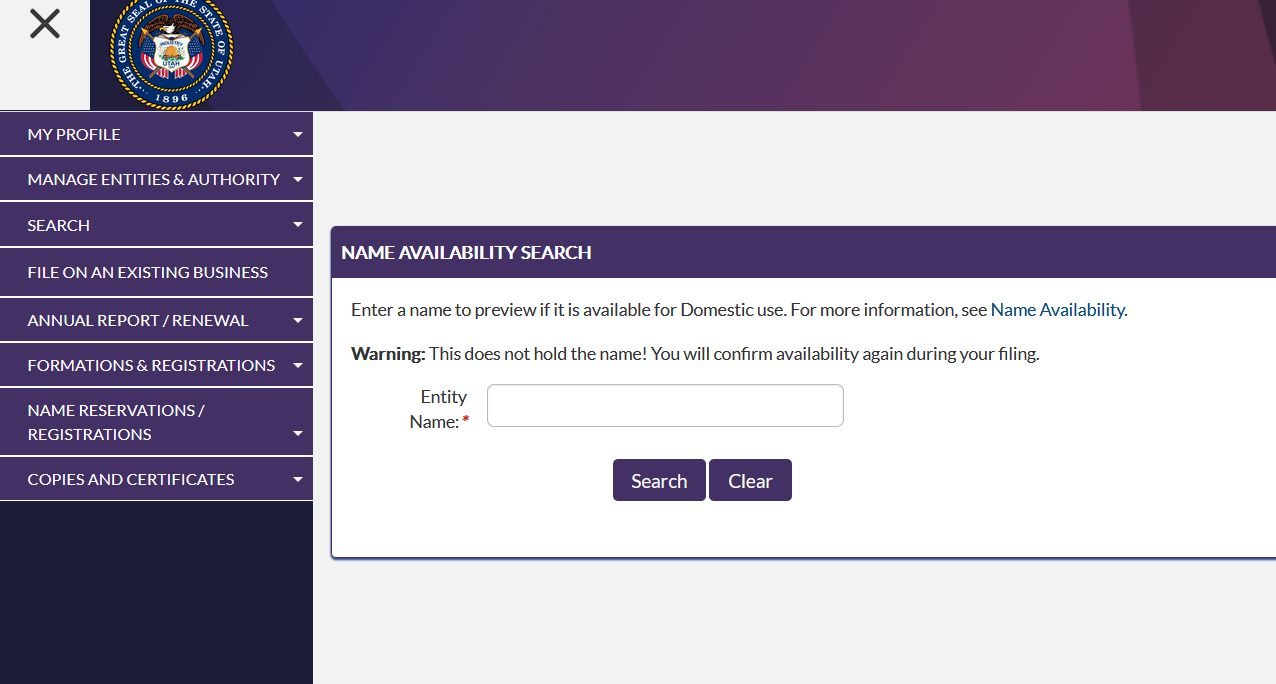
Use the Name Availability Search tool on the Business Registration System website to check if the desired name for your company is available. If that name has not already been taken, the words “The Name is Available” will appear on the screen.
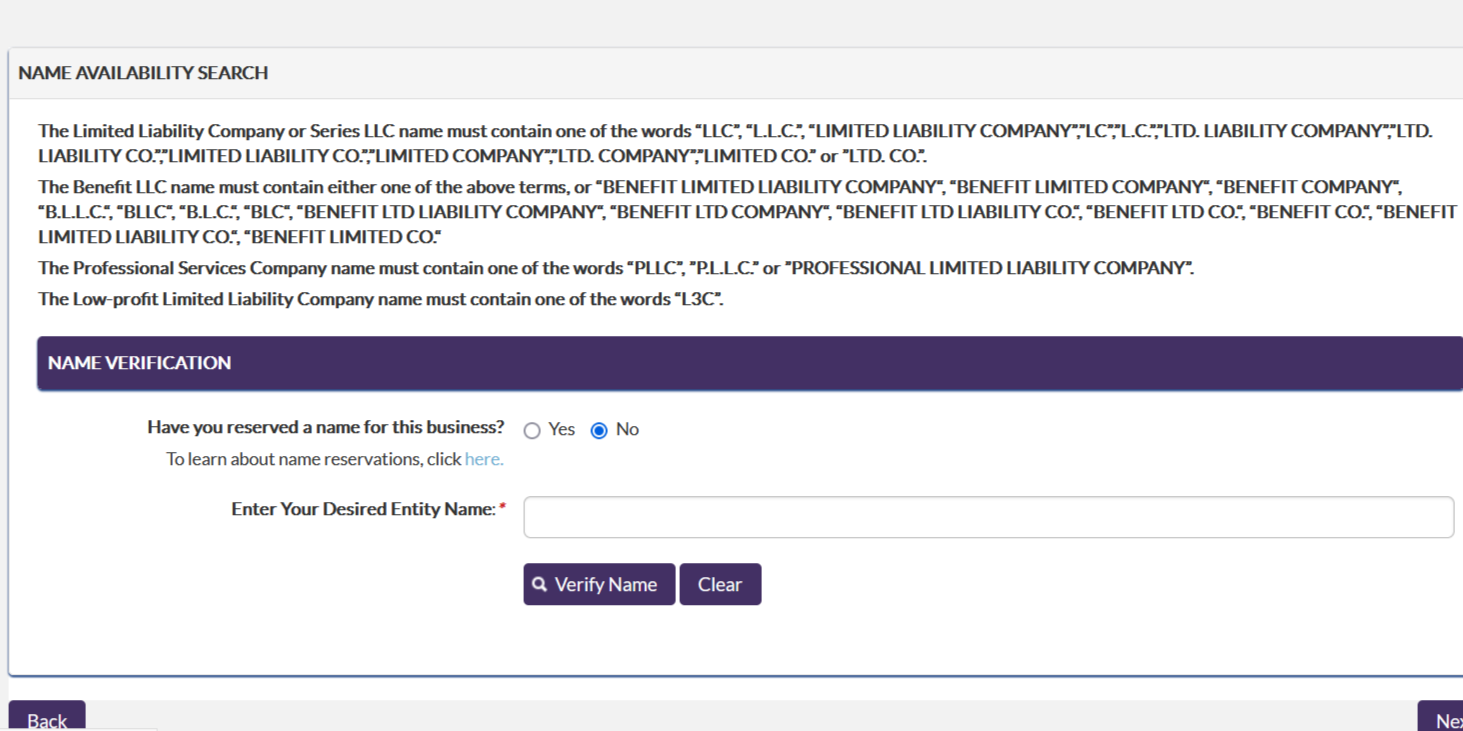
The name of a Utah LLC must contain the words “limited liability company” or “limited company,” or one of these phrases with the abbreviation “Ltd.” or “Co.” Alternatively, an LLC name can include one of the following abbreviations: “L.L.C.”, “LLC”, “L.C.”, or “LC.”[2]
2. Select a Registered Agent
Each limited liability company in Utah must designate and maintain a registered agent in the state. The agent must have a mailing address in Utah where they can receive service of process.[3]
3. Register the LLC
There are two options for registering your LLC in Utah: online or by mail.
Option 1: File Online
Go to businessregistration.utah.gov to begin the process of filing your LLC online.
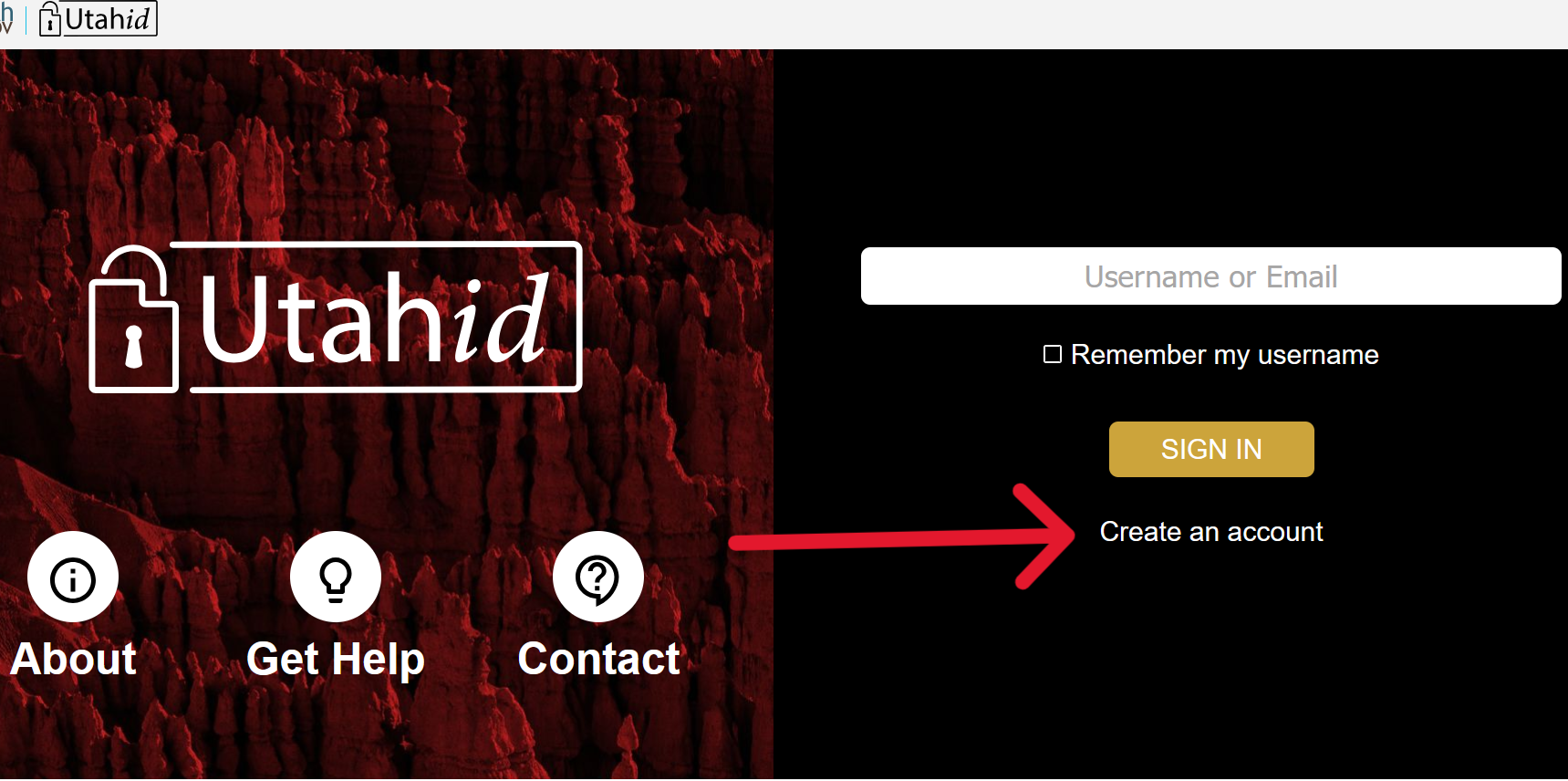
You will need a UtahID account in order to access the online Business Registration System. In addition to entering your name and contact information, you will be prompted to create a unique username and password for your account.
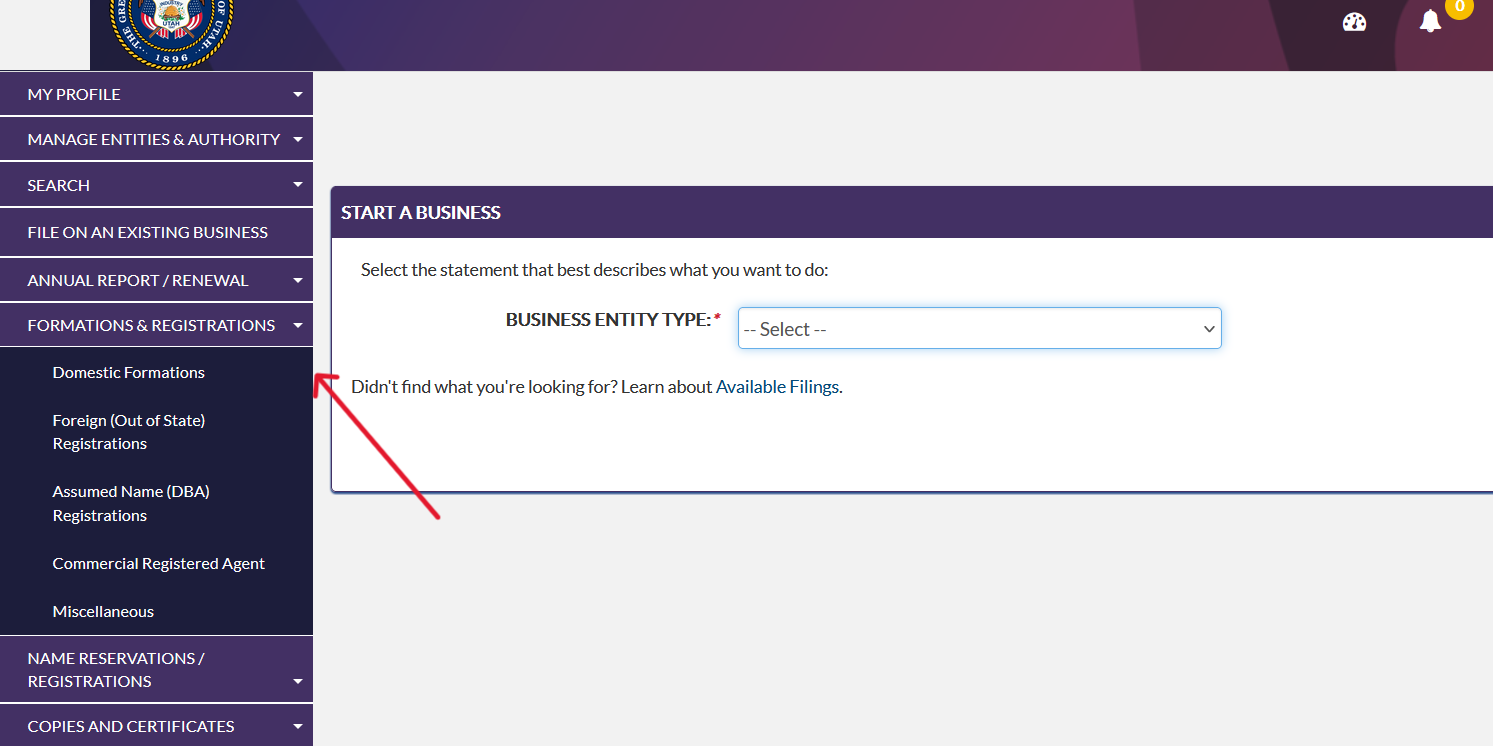
Click “Formations & Registrations” on the side menu and choose the type of entity you would like to register. Then, use the dropdown menu to specify that you would like to create a limited liability company.
First, indicate the subtype of limited liability company (such as a professional or series LLC) for the business you are forming. On the next page, use the Name Availability Search tool to verify that your desired name is available and acceptable under Utah law.
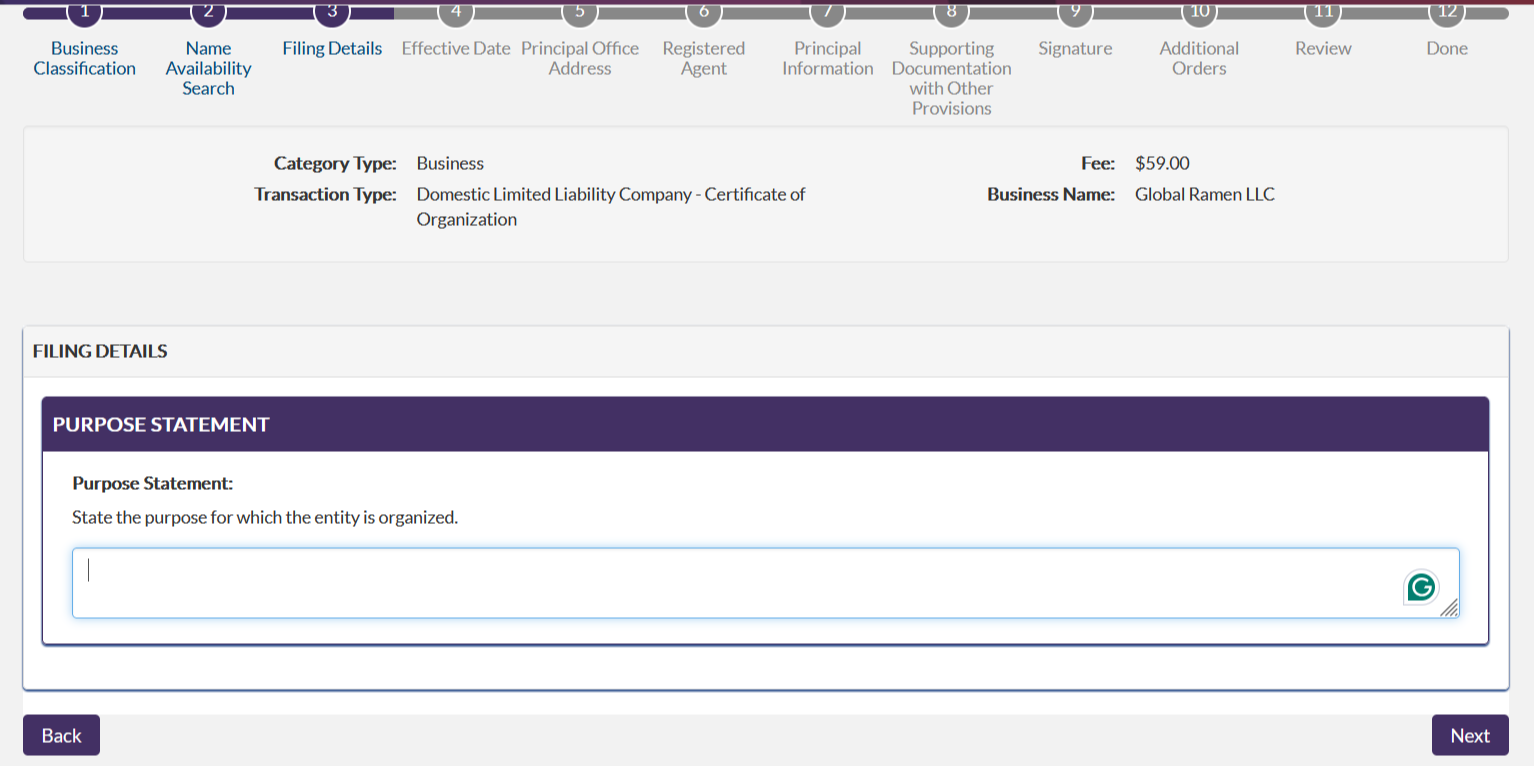
On the following pages, you will be prompted to input information regarding your LLC’s purpose statement, effective date, and principal office address. You will also be asked to enter the details for your registered agent and at least one principal.
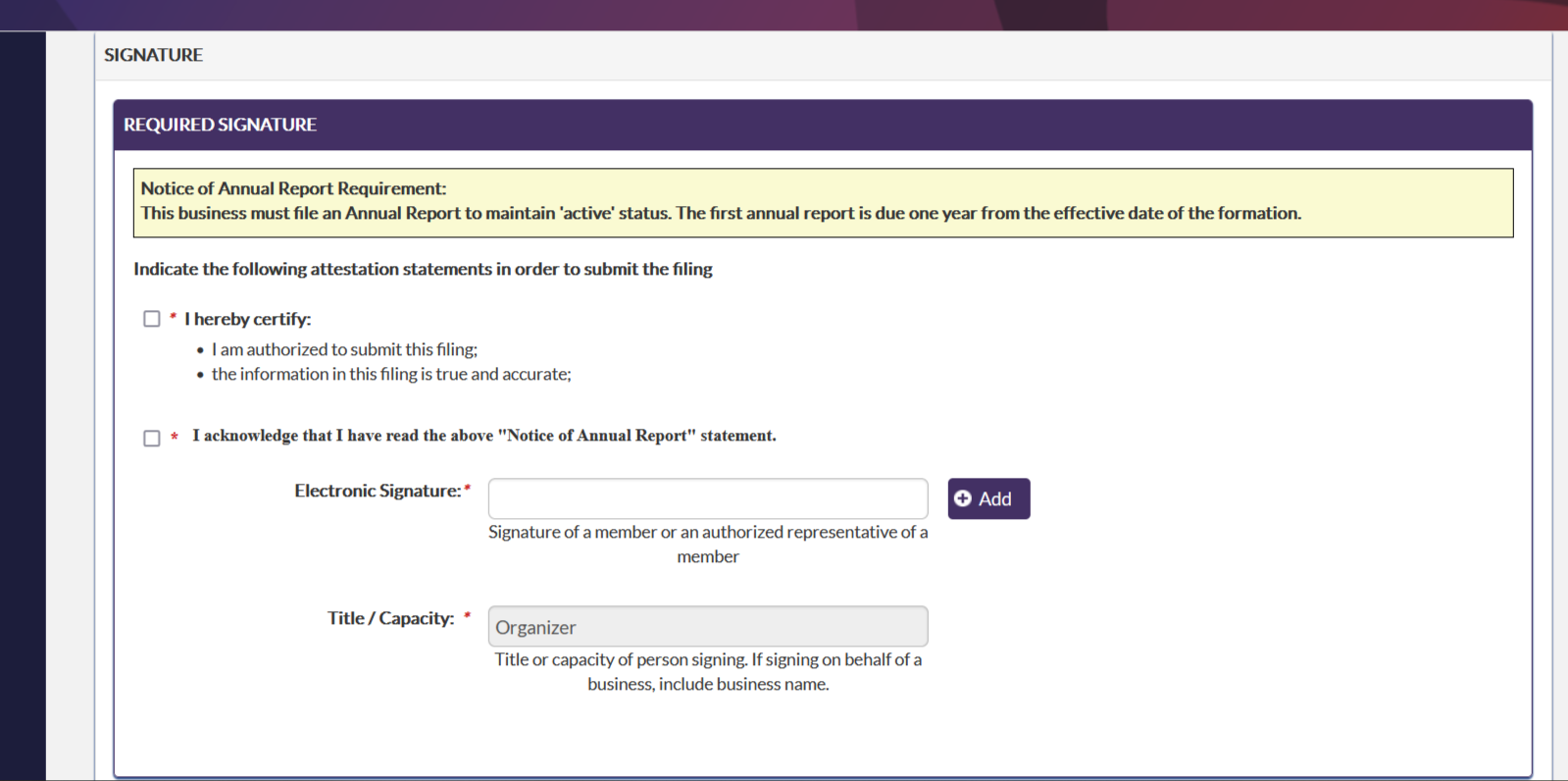
You will have to certify that the information submitted on the form is accurate before electronically signing the document. On the next page, you will have the opportunity to select two-day expedited processing services for an additional $75 fee.
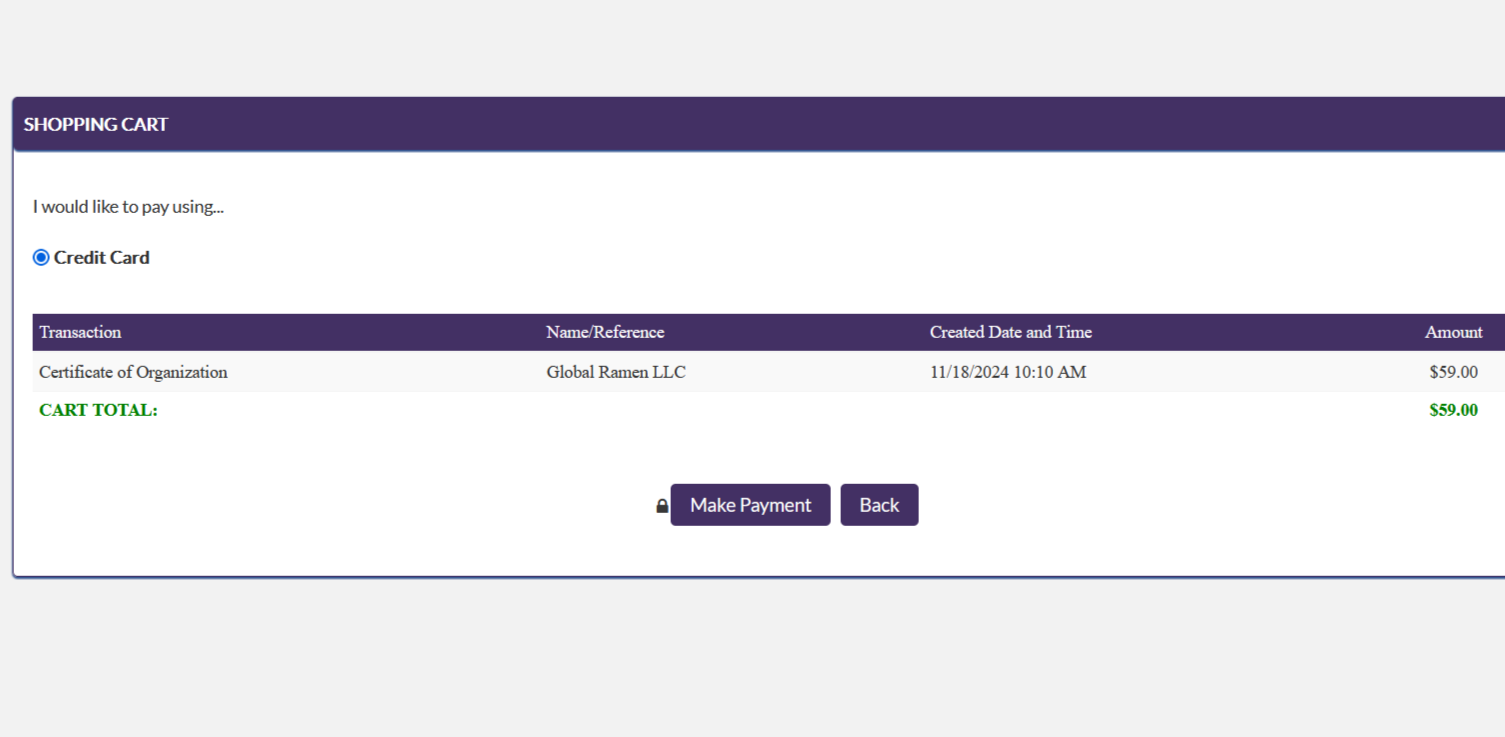
After completing all of the form’s prompts and reviewing the submitted information, add the form to your cart. From there, proceed to the checkout page to input your payment information. Once you complete the payment process, your filing will be complete.
Option 2: File By Mail
Complete the appropriate form and send the document, along with a check, money order, or cash for the filing fee, to the Division of Corporations and Commercial Code.
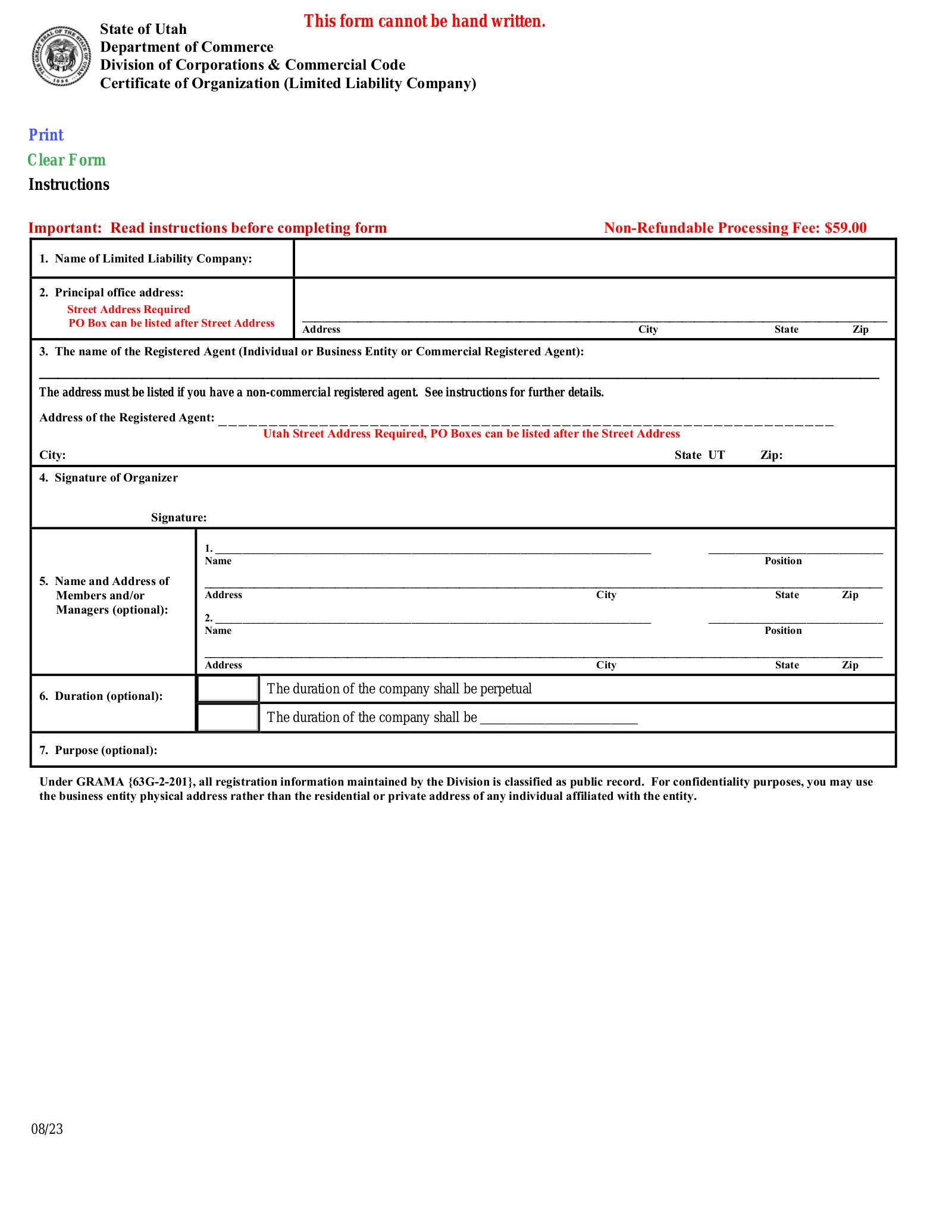 Certificate of Organization – Domestic LLC – For in-state entities.
Filing fee: $59 check or money order made payable to the State of Utah.
Mailing address: Division of Corporations and Commercial Code, PO Box 146705, Salt Lake City, UT 84114-6705
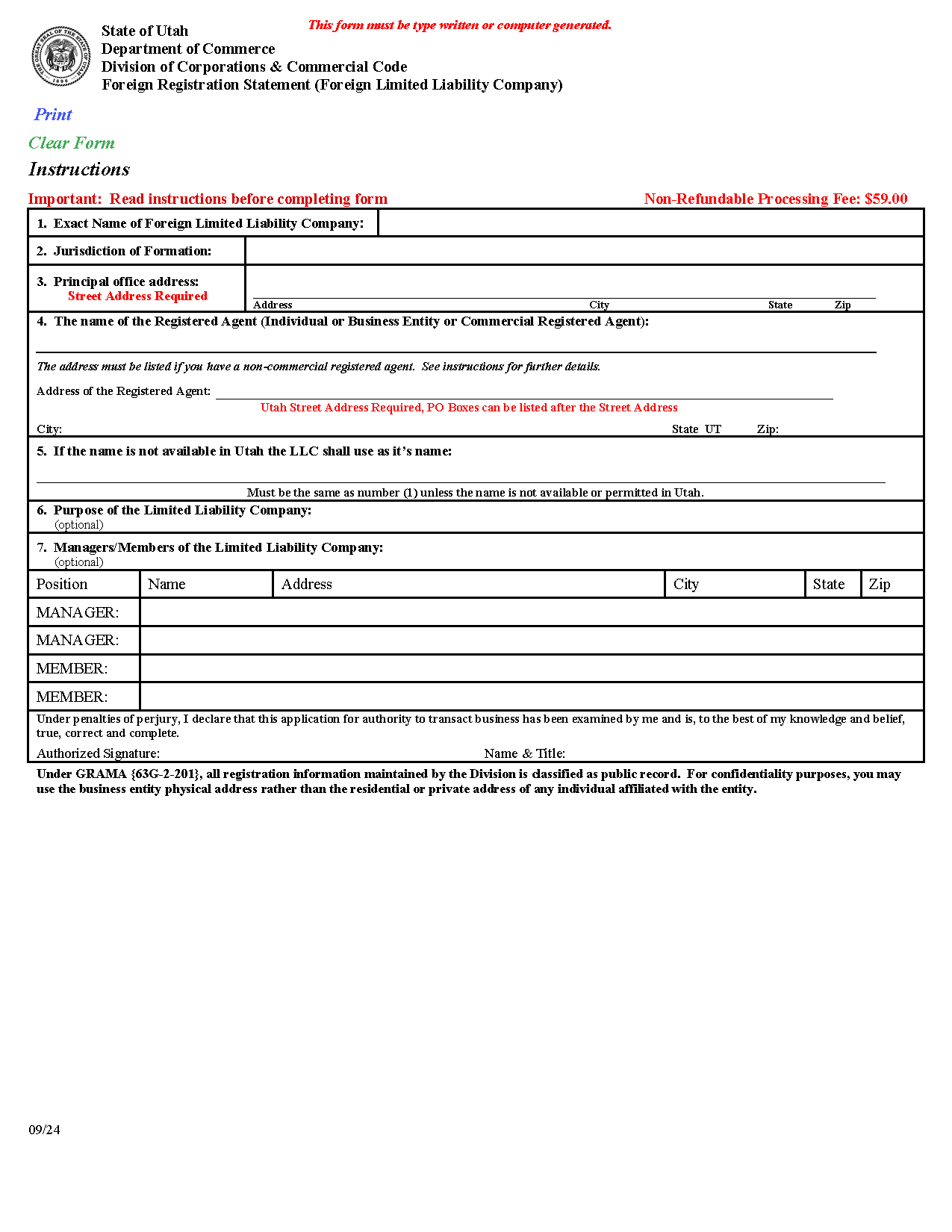 Foreign Registration Statement – Foreign LLC – For out-of-state entities.
Filing fee: $59 check or money order made payable to the State of Utah.
Mailing address: Division of Corporations and Commercial Code, PO Box 146705, Salt Lake City, UT 84114-6705
4. Obtain an EIN
- Apply Online: www.irs.gov
- Apply by Fax/Mail: Form SS-4
Every Utah LLC must obtain an Employer Identification Number (EIN) from the Internal Revenue Service to operate in the state.[4]
5. Write an Operating Agreement
While businesses in Utah are not legally required to draft an operating agreement, it is generally recommended that all LLCs do so. An operating agreement establishes and governs the structure, ownership, and decisions of a business.
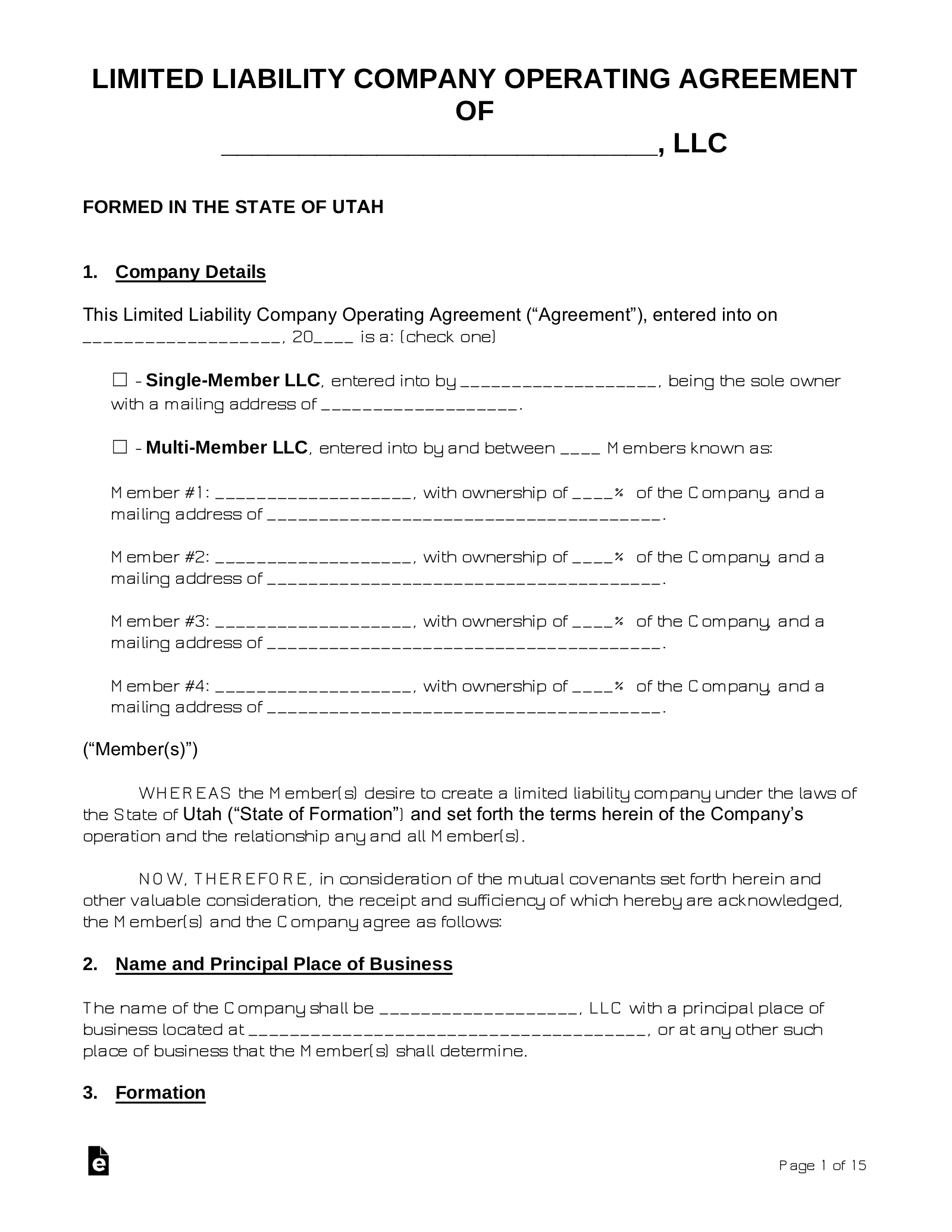
Download: PDF, MS Word, OpenDocument
6. Choose a Tax Classification
The following are the most common types of tax classification for LLCs:
- LLC – With an LLC classification, a partnership or sole proprietorship is considered a “pass-through entity,” where profits are taxed as income for the owners and members.
- S-Corporation – In an S-corporation, shareholders receive all profits and losses of the business, and they must pay taxes on them as income. An LLC must file IRS Form 2553 within 75 days of formation to file as an S-corp.
- C-Corporation – As a C-corp, all business profits and losses are filed as a separate corporate entity. To be recognized as a C-corporation, an LLC must file IRS Form 8832 within 75 days of formation.
7. File Annual Renewal
An LLC in Utah must file an annual renewal, otherwise known as an annual report, every year with the Division of Corporations and Commercial Code. This renewal is due on or before the anniversary of the original registration date.[5]