
Popular Forms
 Form 1099-NEC: For submitting a record of payments to contractors in excess of $600 to the IRS and the recipient.
Download: PDF
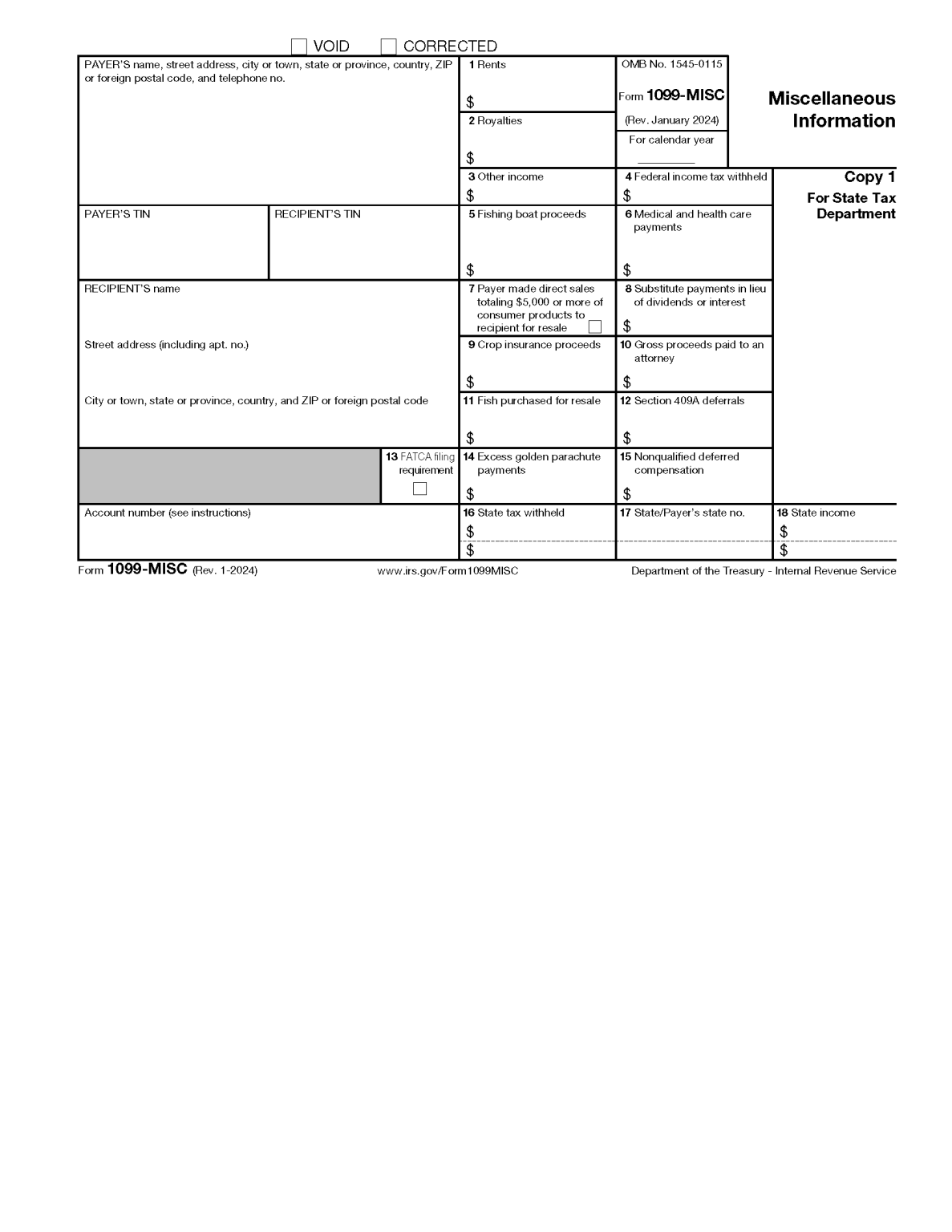 Form 1099-MISC: For reporting certain payments made by a business or organization above specified dollar thresholds.
Download: PDF
 Form W-2: To record wages paid to an employee and taxes withheld during a calendar year.
Download: PDF
 Form W-4: To obtain employee withholding amounts for correct income tax deductions.
Download: PDF
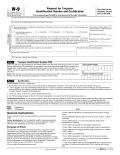 Form W-9: Used to obtain a taxpayer’s TIN for recording payments made.
Download: PDF
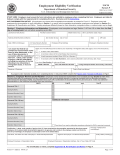 Form I-9: Verifies an employee’s eligibility to work in the U.S.
Download: PDF
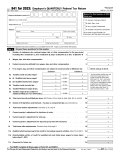 Form 941: For employers to report federal payroll taxes withheld.
Download: PDF
IRS Forms: By Category
- Business Tax Forms: Specific forms for partnerships, corporations, sole proprietorships, small businesses, deductions, and miscellaneous forms.
- Employment/Wage Tax Forms: Used by employers to report wages paid to employees and the resulting taxes withheld from employee paychecks.
- Investment Tax Forms: To report gains, losses, and other information from investment activities.
- Retirement Tax Forms: Filed to report contributions, distributions, and other information related to retirement accounts.
- Self-Employment Forms: To report income for individuals who are self-employed or work as independent contractors.
- Unemployment Tax Forms: Used to report and pay taxes related to unemployment compensation.
Filing Deadlines
Filing deadlines can vary depending on the type of return and taxpayer classification. Returns are generally due on April 15 (National Tax Day), or, if the 15th is on a weekend, the following business day.
Employer Deadlines
| January 31 | February 28 | March 15 | March 31 |
April 15 |
| Form 1099-NEC Employers (without all) |
Form 1096 All Employers |
Form 1065 Partnerships |
Form 1099-MISC All Employers |
Form 1040 Individuals |
| Form W2 All Employers |
Form 1120-S S Corporations |
|||
| Form W3 All Employers |
Form 2553 Corporations |
|||
| Form 941 All Employers |
Freelancer/Self-Employed Deadlines
| April 15 |
June 15 |
September 15 |
January 15 |
| Form 1040-ES (First Payment) |
Form 1040-ES (Second Payment) | Form 1040-ES (Third Payment) |
Form 1040-ES (Fourth Payment) |
Employee Deadlines
| February 15 |
April 15 |
July 31 |
| Form W-4 (Employees) | Form 1040 (Individuals) | Form 5500 (Employees) |
Filing Extensions
Form 4868 can be used to request an extension, but it must be filed before the tax day deadline. If granted, the taxpayer has until October 15 to file their taxes. A filing extension does not grant an extension for payment. Late fees will be charged if tax payments are late.
How to File
Depending on the document, IRS forms can be filed by mail, fax, electronically, or via a tax professional.
Electronic Filing
- IRS Free File Guided Tax Preparation – Available for free to any taxpayers with an AGI (adjusted gross income — or your net taxable income minus eligible deductions) of less than $79,000.
- Free File Fillable Forms – Available for all taxpayers. The taxpayer must use publications and do the legwork to understand and complete the forms.
- Paid Software – Popular tax software providers like TurboTax, H&R Block, and TaxAct guide taxpayers through tax forms and electronically file forms. These paid platforms range from free to $200+.
Mail Filing
IRS tax forms can be filed by mail. Taxpayers can obtain the necessary forms for filing, complete them, and mail them to the IRS address listed on the form.
Some addresses may differ depending on whether a payment is included. Returns processed via mail can be delayed by weeks.
The IRS notes on its website that taxpayers and tax professionals are encouraged to file returns electronically.