
Key Features
- Locks in purchase price. Both parties will have the security of knowing a sales price has been negotiated to serve both their interests.
- Building toward a down payment. Commonly, a tenant will pay “rent credits,” which is a portion of the rent set aside toward a down payment.
- Alternative financing. Commonly, a landlord will agree to participate in seller-financing as part of the agreement.
- Tests the relationship. Allows the parties to understand one another under a tenancy before entering into a sales transaction.
By State
- Alabama
- Alaska
- Arizona
- Arkansas
- California
- Colorado
- Connecticut
- Delaware
- Florida
- Georgia
- Hawaii
- Idaho
- Illinois
- Indiana
- Iowa
- Kansas
- Kentucky
- Louisiana
- Maine
- Maryland
- Massachusetts
- Michigan
- Minnesota
- Mississippi
- Missouri
- Montana
- Nebraska
- Nevada
- New Hampshire
- New Jersey
- New Mexico
- New York
- North Carolina
- North Dakota
- Ohio
- Oklahoma
- Oregon
- Pennsylvania
- Rhode Island
- South Carolina
- South Dakota
- Tennessee
- Texas
- Utah
- Vermont
- Virginia
- Washington
- Washington D.C.
- West Virginia
- Wisconsin
- Wyoming
Rent-to-Own Process (10 steps)
Two (2) Types
- Option to Purchase – The tenant has the option to buy the property at any time during the lease period.
- Lease-Purchase – The tenant is obligated to buy the property within a specified period (or will commonly lose a deposit amount).
1. Negotiate the Rental Arrangement

Like any residential lease, it’s required that the parties come together and decide the following:
Lease Topics
- Monthly Rent ($)
- Term
- Security Deposit (View Maximum Amounts by State)
- Utilities and Services

3. Attach Required Disclosures

Attach the required disclosure forms for the state where the property is located. This often includes a disclosure form listing the current condition of the property and any defects or repairs known by the seller.
Common Disclosure Forms
- Lead-Based Paint Disclosure: Required to be attached to the agreement if the property was constructed before 1978.
- Property Disclosure Statement: Lists the property’s current condition, including its utilities.
- Homeowners Association (HOA) Disclosure: If the property is part of an HOA, all the regulations must be transferred to the buyer.
- Megan’s Law Disclosure: To inform the buyer of where they can find sex offenders in the immediate area.
- Radon Gas Disclosure: If required, the last testing results for radon gas on the property should be listed.
4. Check the Tenant’s Credit
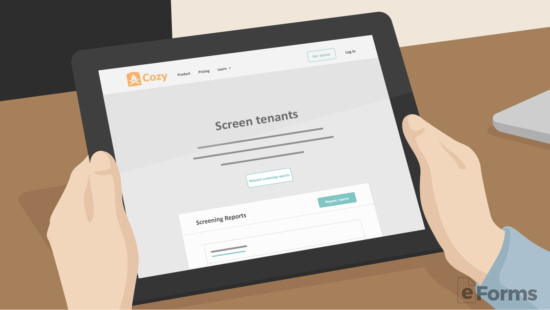
Like any other lease agreement, the landlord is recommended to give the tenant a rental application in order to obtain their personal information to perform credit, background, and consumer checks.
Consumer Report Provider
- MySmartMove.com (TransUnion) – $25
- Avail – $24.99
- Zillow Rental Manager – $35
Sex Offender Search
U.S. National Directory – To perform a nationwide check of an individual or geographical area.
5. Verify the Tenant’s Income

In Q1 of 2025, the rent-to-income ratio was 28.1%.[1] Therefore, it is recommended that a landlord verify a tenant’s income to ensure they can afford the monthly rent.
Ways to Verify Income
- Bank Statement – Last 2-3 months
- Employment Verification
- Pay Stub – Past 2 weeks.
- Tax Return – Past 2 years
6. Signing the Document
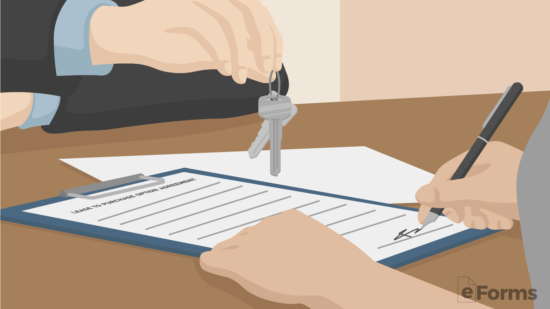
At the lease signing, the tenant must pay the security deposit, first month’s rent, and any other fees. In exchange, the landlord should provide keys, fobs, and any other access to the property.
Recording
In some States, such as Texas[2], recording at the Registry of Deeds office is required for documents that grant an executory right to purchase real estate.
7. Tenant Moves In

The tenant can move into the property. The tenant pays rent and continues their obligations under the lease until ready to purchase.

9. Enter into a Purchase Agreement

The parties should convert their agreement into a purchase and sale agreement and other negotiable items.
Negotiated Items
- Appliances & Fixtures: The sale includes a list of the appliances and fixtures.
- Closing Date: The agreed-upon deadline by which the buyer must complete the property purchase.
- Financing Contingency: The conditions under which the buyer has to obtain financing.
- Inspection Period: The buyer’s right to inspect the property for defects.
- Survey: To confirm that the property lines are where the owner claims they are.
- Title Defects: The buyer’s right to perform a title search and, if any defects appear, the timeframe to fix such issues.
10. Close on the Property

At the closing, the buyer typically wires funds to the title company and signs all necessary documents to transfer ownership. If the seller provides financing, the parties will sign additional loan documents to complete the sale.
There are usually closing costs and transfer taxes due by the parties to complete the transaction. This will be provided to each party beforehand in a closing statement.
Recording the Deed
The sale is final and complete when recorded at the local Registry of Deeds office. It is commonly recorded within 30 days after the closing.
Seller/Owner Financing
It is common in a rent-to-own agreement for the seller to give owner financing to the buyer.
In this scenario, the seller commonly holds a 1st lien through a promissory note secured with a deed of trust (mortgage). Therefore, if the buyer defaults on their payments, the seller has priority lien rights and can foreclose and repossess the property.
Pros
- Higher price. Commonly, the seller can get a premium price because they can provide financing.
- Income stream. Receiving monthly payments provides a consistent income stream, while the seller only pays income tax on the interest collected, not the principal.
- Faster transaction. Traditional financing requires specific demands, such as appraisals, inspections, and buyer income verification.
- Capital Gains. If the owner qualifies (owned the property for more than one year), they only have to pay capital gains taxes, not income.
Cons
- Immediate ownership. Buyer takes immediate ownership, but is secured via a deed of trust.
- Delayed proceeds. The principal is paid over time instead of in a lump sum in a standard transaction.
- Interest is considered income. The interest the seller collects during the loan is viewed as ordinary income by the IRS, not as capital gain.[3]
- Risk of default. If the buyer defaults on the loan, the seller could be subject to legal costs and filings in order to repossess the property.