
Key Features
- Defines obligations. Outlines the job duties, performance standards, and day-to-day responsibilities.
- Protects confidential information. Allows the inclusion of a non-disclosure clause and protections for intellectual property.
- Clarifies compensation and benefits. The hourly pay or salary (including bonuses) and employee benefits.
- Right to terminate. The terms under which the employer can terminate and the notice period for the employee to vacate their position.
- Post-termination protection. To include a non-compete, non-solicitation, or non-disparagement clause for a mutually beneficial separation.
By State
- Alabama
- Alaska
- Arizona
- Arkansas
- California
- Colorado
- Connecticut
- Delaware
- Florida
- Georgia
- Hawaii
- Idaho
- Illinois
- Indiana
- Iowa
- Kansas
- Kentucky
- Louisiana
- Maine
- Maryland
- Massachusetts
- Michigan
- Minnesota
- Mississippi
- Missouri
- Montana
- Nebraska
- Nevada
- New Hampshire
- New Jersey
- New Mexico
- New York
- North Carolina
- North Dakota
- Ohio
- Oklahoma
- Oregon
- Pennsylvania
- Rhode Island
- South Carolina
- South Dakota
- Tennessee
- Texas
- Utah
- Vermont
- Virginia
- Washington
- Washington D.C.
- West Virginia
- Wisconsin
- Wyoming
By Type (6)
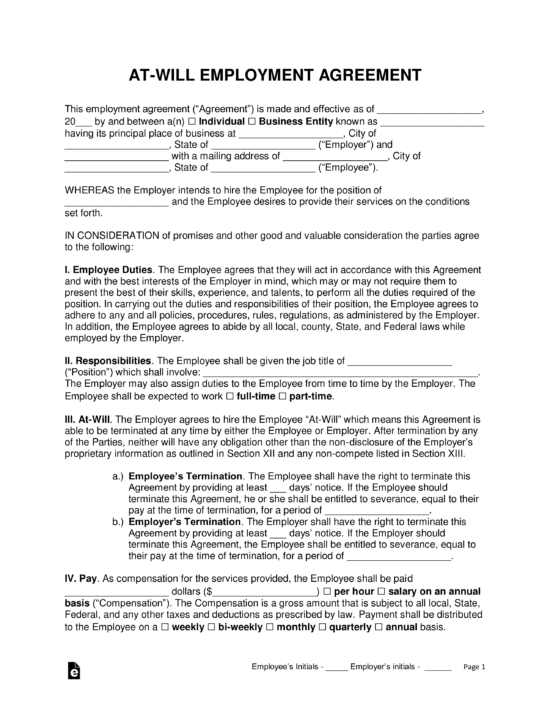 At-Will Employment Agreement – No time-period commitment by the employer. May terminate at any time with or without severance. At-Will Employment Agreement – No time-period commitment by the employer. May terminate at any time with or without severance.
|
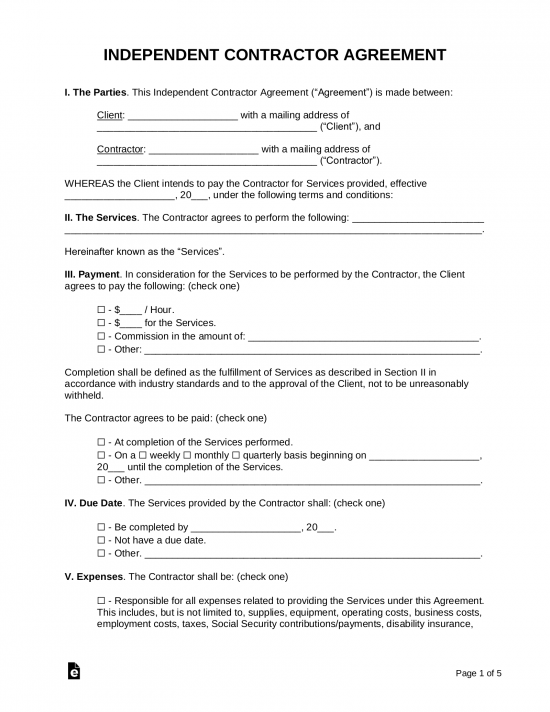 Independent Contractor Agreement – Classified by the IRS as a 1099 Employee, an individual or entity paid to perform a service. Examples include contractors, medical professionals, attorneys, etc. Independent Contractor Agreement – Classified by the IRS as a 1099 Employee, an individual or entity paid to perform a service. Examples include contractors, medical professionals, attorneys, etc.
|
 Internship Agreement – When hiring an unpaid intern who agrees to work for on-the-job training related to their field of study. Internship Agreement – When hiring an unpaid intern who agrees to work for on-the-job training related to their field of study.
|
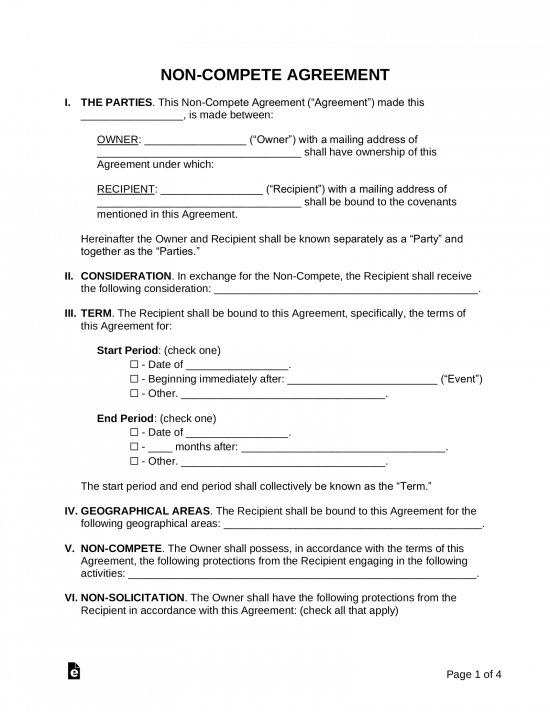 Non-Compete Agreement – Depending on the restrictions, an employee may not be allowed to work for a competitor or in the same industry as the employer. Non-Compete Agreement – Depending on the restrictions, an employee may not be allowed to work for a competitor or in the same industry as the employer.
|
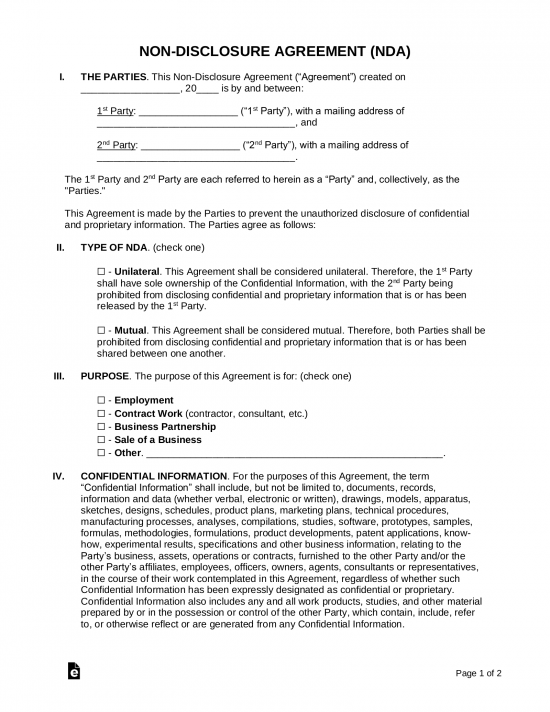 Non-Disclosure Agreement (NDA) – Requires an individual or business to keep information learned from the employer confidential. Non-Disclosure Agreement (NDA) – Requires an individual or business to keep information learned from the employer confidential.
|
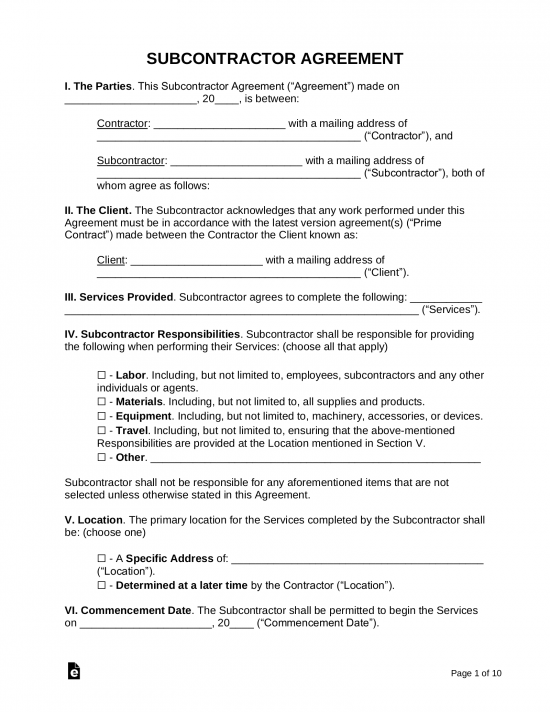 Subcontractor Agreement – Made between a contractor and a subcontractor. Subcontractor Agreement – Made between a contractor and a subcontractor.
|
How to Hire an Employee

2. Reviewing Applications

The employer will likely receive a high volume of applications and interest for the open position.
3. Schedule Interviews

Before making any commitments, it’s best to interview multiple candidates to evaluate their strengths and weaknesses.
Video Apps (free)
- Google Meet
- Microsoft Teams (formerly Skype)
- Zoom (40 min free)
4. Perform a Background Check

Before negotiations occur, the employer should perform a criminal background check on the candidate to ensure they’re not inviting a violent individual into the workplace.
Background Check Providers
- GoodHire.com – $29.99 plus a one-time setup fee of $49.99
- BackgroundChecks.com – $33.15
- Accurate.com – $29.95
- Checkr.com – $54.99
Sex Offender Check
- www.nsopw.gov – Federal website.
5. Negotiate the Terms

The employer and employee should negotiate the following items:
- Duties: Title and role in the company.
- Duration: If the employment is at-will or for a specific period.
- Payment: Salary or $/hour, including commissions and bonuses.
- Benefits: Such as health care, retirement plans, etc.
- Vacation: Number of days off per year, including federal holidays.
- Personal Leave: Days off for personal or health-related matters.
- Confidentiality (NDA): To protect the employer’s intellectual property.
- Non-Compete: To prohibit an employee from working for a competitor.
6. The Hiring Process

The hiring process is not complete until a written employment contract is signed and IRS documents for compliance.
Onboarding Documents
- Employment Contract: Written agreement outlining the employee’s pay.
- IRS Form W-4: Required by the employee at the start of employment.
- IRS Form W-9: Required by a contractor if more than $600 is paid for services.
- Direct Deposit Authorization Form: Pay an employee using ACH.
- Employee Handbook: Informs the employee of standard company policies.
Minimum Wage ($/hr)
The federal minimum wage in the United States is $7.25 per hour.[1]
Sample
Video
Frequently Asked Questions
Difference between Part-Time vs. Full-Time
- Part-time: Generally speaking, an employee working between 1 to 34 hours per week can be qualified as full-time employment in the United States.
- Full-time: There are no federal laws that define “full-time work”, although 35 to 40 hours per week is considered to be full-time work. 40 hours is the maximum number of hours that an employee can work in a given workweek before overtime is required (overtime pay must be at least one and a half (1.5) times pay).[2]
Difference between an Employee vs Independent Contractor
The main difference is that an employee has federal and state withholding taken from their pay by the employer while an independent contractor is responsible for payment of their own taxes to federal and state authorities.
Employee
- Employer does withhold tax payments;
- When hiring, employee completes IRS Form W-4;
- Employer does obtain unemployment insurance;
- Paid hourly or salary; and
- Employee works for the employer’s business.
Independent Contractor
- Client does not withhold tax payments;
- Contractor completes IRS Form W-9;
- Client does not obtain unemployment insurance;
- Paid per project or task; and
- Contractor works for their own business.
What is At-Will Employment?
Almost every employee who is part of an organization’s staff is employed “at will,” except those in the state of Montana. At-will employment is a type of employment where either the employee or the employer may terminate employment at any time, but the employer may not do so for any illegal reason.
What are the Federal Employment Discrimination Laws?
Workplaces are subject to federal employment and hiring discrimination laws. Employees and applicants may not be discriminated against on the basis of:[3]
- Race
- Color
- National origin
- Religion
- Sex (including gender identity and sexual orientation)
- Pregnancy
- Age (40 or older)
- Disability
- Genetic information